BOOK REVIEW

Jonathan Taylor, A Physical Education: On Bullying, Discipline and Other Lessons (Goldsmiths, 2024), reviewed by NTU Creative Writing PhD student Julie Gardner.
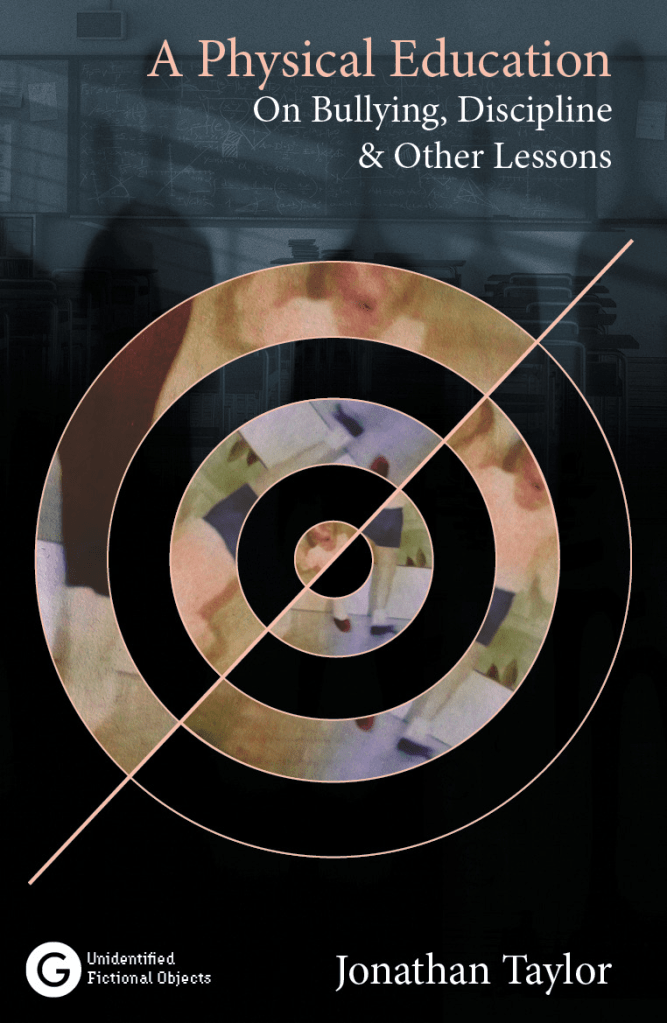
In the first chapter of A Physical Education, Jonathan Taylor –  an author, editor, lecturer and critic who lives in Leicestershire – writes: ‘I want to explore the hall of mirrors that is criticism and autobiography […]. I want to explore the uses and abuses of educational power from a subjective, rather than pseudo-objective, perspective.’ In a book that wears its evident scholarship lightly, Taylor reflects on his own experience in educational institutions, referencing literary criticism, philosophy and sociology – and achieves his aims with clarity and grace.

Having been a victim of workplace bullying myself, at a large primary school where I was deputy-head, perhaps I was looking for some kind of validation of my experiences as I read this book. I found it, but not until Chapter 7, ‘Politics’, when I recognised in Professor Caligula many of the behaviours that had broken my physical and mental health to such an extent that I finally resigned from a job that I had loved. As Taylor says, ‘most bullying is complex, nuanced, full of incongruities and ambiguities.’  As I read the earlier chapters of the book, I found myself thinking, sometimes uncomfortably, about my own behaviour as a teacher, and that of my colleagues. I remembered an incident in the mid 1970s when I had witnessed a boy being asked to remove his plimsoll so the headteacher could hit him with it, and the irony of the child’s ‘thank you sir’ as his shoe was returned to him. As Taylor notes, corporal punishment was banned in British state schools in 1986, when he would have been in his early teens: ‘I was there’, he writes, ‘at that watershed moment. I witnessed the change from a system based on caning to a system based on surveillance, one that attempted to act “on the heart, the thoughts, the will, the inclinations.”’

As is evident from its title, this book is not just about bullying, but also about discipline. Superficially, these are two separate concepts, one acceptable, the other not.  ‘Discipline is the legitimate exercise of authority, bullying is illegitimate, abusive, verboten’ – but, as Taylor points out, ‘the problem is that the line between them can easily seem hazy, even arbitrary.’ This haziness can result in a climate in which ‘disciplinary systems reflect, even enable the bullying they were meant to deal with’, and this, Taylor argues, is ‘institutionalised bullying.’

The book is obviously of particular interest and importance to anyone who works in schools or universities, but it does not confine itself solely to educational institutions and is accessible and engaging enough to appeal to a much wider audience. There are observations and memories about family (‘in general’, he writes, ‘the nuclear family is a little machine for bullying’), including a description of Taylor trying (and failing) to cope with the demands of two-year old twins while his wife was out for the afternoon. Ideas from Foucault, Freud, and Hegel are weaved in, alongside characters from Dickens, Kes and the Harry Potter books – all contained within what is essentially memoir. But A Physical Education is more than memoir: it is an invitation for the reader to think about the nature of power, to consider, in the words of Mary Beard, ‘what we mean by the voice of authority and how we’ve come to construct it.’ It challenges the status quo of our (still) overwhelmingly patriarchal and hierarchical society. ‘After all, to question someone’s authority in any hierarchical system is implicitly also to question the system itself, which is responsible for raising that person up according to its own criteria.’

Towards the end of the book is a brief account of a time when Taylor’s experience of being bullied by a particular boy was at its most intense: ‘After being whispered at a hundred times about my lack of British patriotism, defective testicles, and similarity thereof to Adolf Hitler, I lost my temper, stood up, and threw a chair at Lee. He threw one back, accusing me of bullying him.‘ Like most teachers, I can well imagine this scenario. Indeed, I have faced something similar on several occasions. To say it is challenging would be an understatement. Not only does the teacher have very quickly to establish his or her authority, because to fail to do so could lead to complete chaos, there is also (and arguably more importantly) the need to keep pupils and staff safe in a situation which could escalate quickly. The teacher in question in Taylor’s anecdote was a Mrs Dee, by implication someone ‘who refuses to be ventriloquised by the system bearing down on them; someone who understands that violence, discipline, and bullying are not entirely deterministic – that the bullying cycle can be broken.’

It is principally in these many moments of thoughtful unpacking that Taylor challenges ‘commonplace British wisdom’, arguing that ‘less discipline can mean less misbehaviour; less violence can equal less violence. Sometimes, not punishing, not disciplining, not bullying can actually be a sign of strength rather than weakness.’

This is an important book. I hope it is read widely by teachers, academics, and politicians, and by anyone who is still haunted by past bullying.


If you are a Creative Writing student at NTU and would like to contribute a book review to this website, please get in touch with Rory Waterman.

DO SOMETHING THAT SCARES YOU!

CLAIRE SUZANNE, a mature student on the BA Creative Writing at NTU, discusses fear and the joy and benefits of overcoming it.

Do something that scares you – a phrase I’d heard many times, but I’d never listened. I was the mute child, the socially awkward teenager, the adult who had nightmares about public speaking. I would shy away from the limelight, tucking myself into my homemade office, where I would create fictional worlds that allowed me to be the confident person I always longed to be. But that was before I came to NTU. At uni, I pushed the boundaries and left my comfort zone. At uni, I would no longer be a fictional character.

Bring on year two at NTU, wrap up some Bad Betty Poets, throw in a stage, sprinkle some students on top and what was I doing for my 41st birthday? Reading poetry to an audience, of course! The opportunity arose through WRAP – an extracurricular reading and writing group where I volunteer as an ambassador. WRAP was collaborating with Bad Betty, a poetry publisher that was offering one-to-one mentoring with published poets and performers. The opportunity was open to all NTU students, regardless of course or level of study, and I was surprised to find it wasn’t just Creative Writing students who wrote poetry in their spare time. I was the opposite: a Creative Writing student who did not write poetry in her spare time! This, then, was the perfect opportunity for me to find out if there was a poet hiding inside somewhere, waiting to be let loose.

My mentor, Molly, was amazing. Not only were we the same age, but we also had a similar sense of humour. Her poetry made me smile, especially her references to Dawson’s Creek, traffic jams, and finding the ability to be your genuine self, all of which were relatable. Yet when it came to picking themes for my own poems, my mind went blank. All I knew was that I didn’t want to depress the audience, I wanted to entertain. Then I realised I had to talk about my fear of aging – grey hair, wrinkles, and the dreaded menopause. After all, the reading was taking place on the day I officially became ‘over forty’.

Being on stage was no longer a new experience for me, I’d already read two pieces of prose at the Metronome. But those pieces had won competitions, they had been vetted, judged as ‘good writing’, which gave me the confidence to read them. But my poetry, that was new, it was unheard, it was… uncharted territory! I had nothing to compare it to, and I’d certainly never read my poems to an audience before.

My legs moved in slow motion as I approached the stage, but as far as I was concerned the walk to the microphone could last forever. Then I was there, facing my audience, their faces blurred by lights. My heart bashed against my ribs, and my clammy hands created wet imprints into the piece of paper I was holding. The room was silent, yet the slightest cough or mutter rang in my ears to let me know the audience was waiting.

Then I did something that scared me, and it paid off. To hear the audience laughing and applauding made it all worthwhile. Was the poem metaphorical? Not really. Did it rhyme? Yes. Could I write poetry for kids? Probably. But the most important thing was the experience. An experience inaccessible to me before I started at NTU, and one I will never forget, whatever future successes I might have.

Fiction became reality.

Poetically speaking

Laura De Vivo discusses her rediscovery of contemporary poetry.

I have dabbled in almost all genres, broadly speaking. As the years rolled on, I slowly leant more towards prose, neglecting  poetry, and I think I have done myself a disservice. So, entering my second year of the Creative Writing Degree at NTU, I felt it important at the very least to have a respectful understanding of the discipline, and dare I say even a greater appreciation for it. I enrolled on the optional Poetry and its Contexts module, where I would read and discuss several collections of contemporary poetry and write my own.

The first lecture terrified me: I felt I had bitten off more than I could chew. Enveloped by knowledgeable lecturers and students that have a real passion and flare, I was guided through the fun-loving verses of Wendy Cope to the long-lined, discursive poetry of Togara Mazanenhamo. In his collection Gumiguru, Muzanenhamo’s imagery had me hooked and for the first time I didn’t feel like I was drowning. He spoke my language, and he spoke of home, a theme close to my heart.

I soon found words falling from my fingers. Guided by lecturers, I was polishing drafts, and, like a magic eye picture, the stories I wanted to tell were emerging. It was around this time that I took leave of my senses and applied for a poetry scholarship, through NTU’s WRAP (writing, reading and pleasure) programme. After a tense wait, I was shocked to learn I had a place. I had gone from hiding, to committing, to standing on stage in a Poetry showcase, where I was to speak my own words for five minutes. I was petrified.

WRAP was working in partnership with Bad Betty Press. Fifteen applicants received one-to-one mentoring from a Bad Betty poet right up until the showcase. I was paired with the talented Jake Whitehall who, with his boundless enthusiasm, knowledge and friendship, got me from apologising for how terrible I was to standing proud on a stage. Meetings became an opportunity to consume coffee and talk writing and life. Emails flew between us, and words were axed and added – no syllable was safe. Each new draft pushed me closer to a polished piece. When I dreamed of being a writer, I never considered that I would have to get used to performance and public speaking, but it was time to crawl out from behind my laptop.

In addition to the poetry inspired by Muzanenhamo, Jake asked me to write a ghazal, a beautiful style of Persian poetry with a thought-provoking pattern and refrain. Writing something new made me glow inside and I was ready to share it. It wasn’t until I was on the stage that I realised all my heartfelt personal words, thoughts and angsts were about to be laid bare, and I wasn’t sure I could do it, but Jake was there with hugs of encouragement. I wasn’t allowed to doubt myself for a second.

As I stepped into the room, one of the fifteen, I sought the faces of my family, like a child. There they were, ready to witness my flight or fall. I told myself I knew my poems, I knew how I wanted to deliver them and what emotions I wanted to evoke. I had worn a hole in the carpet outside the culture lounge pacing while practising my diction and delivery. Here was my chance to tease reactions from an audience. This alone was priceless, I realised, and I’d keep it in the back of my mind in future. Then, concentrating on not tripping onto the stage, I stared out into the blackness. And I saw no one – in that moment I was alone. I read from my heart, I read like a poet, in fact I gained a fan who asked for an autograph. With feedback like that, I have to accept I am now a poet.


Laura De Vivo has just completed the second year of the BA Creative Writing at NTU.

INSPIRED BY PAIN

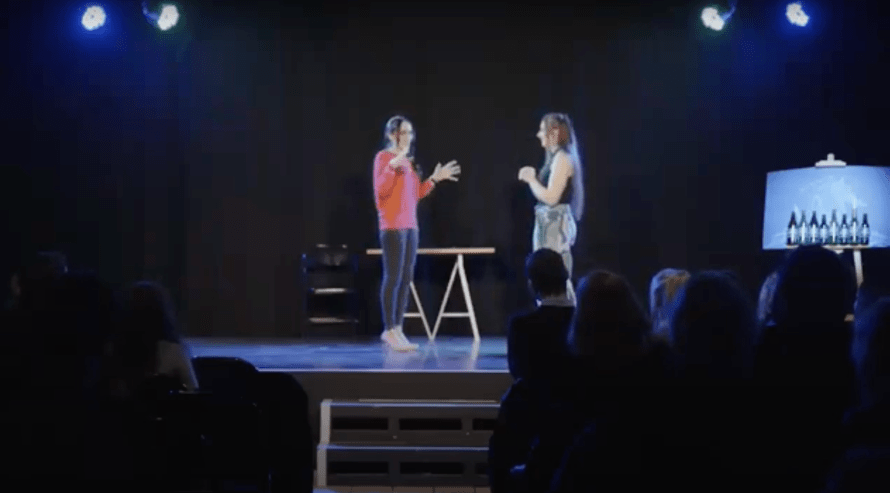
Second-year BA Creative Writing student Laura De Vivo recently watched her monologue, ‘The Demon in My Head’, being performed on stage. In this blog post, she writes about what inspired her, and the experience of seeing the work brought to production. You can watch it below.

When inspiration hits, its like a bolt of electricity through the body. Writing can be cathartic, and that was certainly the case here. I suffer from the rare condition called trigeminal neuralgia. The need to be strong, to fight it, to be the one that stays on top is a daily battle and not one I always win. Not only that, but I go head-to-head with an invisible demon. How can I fight it? With what I have at my disposal: words.

The opportunity to fight came, surprisingly, in the form of a writing prompt from a wonderful theatre company directed by Alice Connolly. Set up during lockdown, Message in a Bottle Monologues provides opportunities for writers and actors to collaborate. Initially, this was over Zoom, but word spread fast as the world has opened back up.

Alice, herself a writer and actress, provides the prompt; the writers provide the material; the actors provide the performance. In November 2023, the prompt was ‘Darkness and Light’, and instantly I knew what I would write. I was going to give trigeminal neuralgia a form and put it in its place while raising a little awareness.

Writing about something so personal and so raw was easy. As Hemingway said, ‘just sit at your typewriter and bleed’. I played on the qualities of each symptom and my reactions to them; I took all my anger from deep in my belly and exploded it onto a page. With the piece written, I nervously sent it off to Alice, not knowing whether it was what she was looking for. She loved it, and my five minutes of anger was accepted.

The premise of the show is clever: the writers and actors all remain anonymous; the actor is revealed at the beginning of each performance, and the writer at the end. On the night, you are invited to attend as an audience member. While mingling with drinks, there is an expectation that you will not discuss anything that might undermine the mystery. The theatre is littered with writers, actors and spectators, only Alice knowing who is who, and how they have been paired.

I sat through each performance on the edge of my seat, afraid to breathe, not knowing when my piece would be announced, trying to concentrate on the other pieces, and – more than anything – worrying about myself being revealed. I even had a painful wait through the interval. Finally, second to last, the title of my piece was announced. This was it – my talent, or lack of it, was about to be laid bare. I held my breath, eyes unblinking, as James Doolan (‘my’ actor) took to the stage. I was transfixed. Would he play it how I hoped? Would he give it the anger I had when writing it? Would it live up to my expectations?

I was in awe. Every raw emotion was delivered with all the venom I had intended. Yet I couldn’t believe those words were mine, that they had taken a journey from my head through my fingers then out of his mouth, almost seamlessly.

As a writer I hide behind my laptop, never needing or wanting to be seen, yet my moment in the spotlight was coming. All the writers were interviewed, to shed some light on their pieces. Standing on that stage was daunting, but after James’s wonderful performance I was proud to claim every word. When the show was over, I was suddenly swamped with people congratulating me on a job well done, asking to stay in touch, asking what was next. It was overwhelming, an insight into things that could be mine with hard work and determination, and I left the theatre that evening feeling like I had won an Olivier Award. It was an inspiring experience that had me burning for more. And I had put trigeminal neuralgia in its place. For a little while, anyway.

GET UP, GO OUT!

Leah Jackson, a first-year BA Creative Writing student, went to Paris and Florence, and came back full of ideas.

Many writers tend to struggle with ‘writer’s block’ – it is even the subject of a recent post on this blog. This term may be used when a writer feels lost and insecure in their ideas and projects because of a lack of motivation and inspiration. However, I believe this need never be permanent, as I have discovered a way to combat it: go and see something new, if you can!

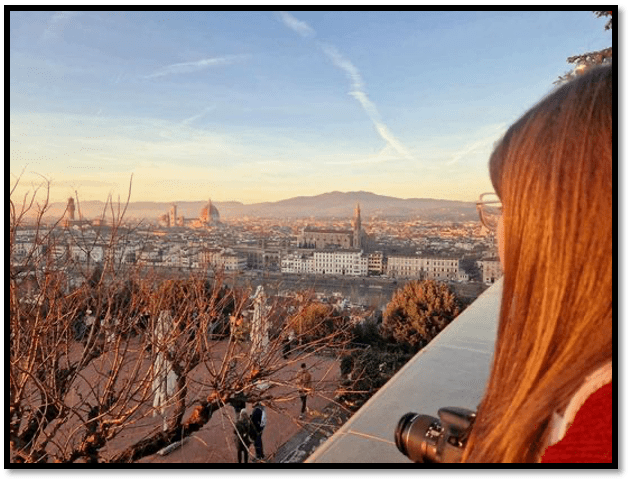
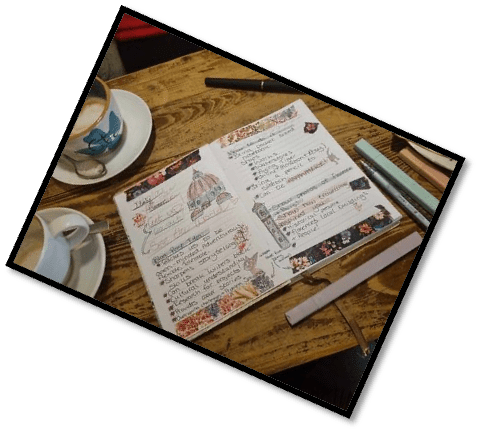
Throughout 2023, I was very grateful to find myself experiencing lots of opportunities to travel. I visited Paris with my college friends in February, and saved up my money to visit Florence for a week in December with a close family member. Every time I was traveling to a new area, I noticed my inspiration was like a bouncy ball of energy in my head, whizzing around full of creative ideas. I had never received that kind of inspiration when staying in my safe university hall bedroom). Breaking out of my comfort zone filled me with refreshing and exciting ideas I would never otherwise have added to my writing journal. Not only that, but it was also helpful to my research for my writing.

When I travelled to Paris, I was captivated by the beautiful city and the fashionable people I walked past. The architecture was extravagant compared to what I was used to. I found myself writing a lot of thoughts down in my journal during my time there. The building in this photo got me thinking creatively: I wondered whether this was an apartment building, and if so, who might live there? Is that person good? What is their occupation? Do they ever leave the building?

I hadn’t travelled outside of the UK since the age of eight, and I remember being scared at first to leave the country without my family. However, I soon found that it transformed my mind to become more flexible, adventurous and open to understanding other ways of living, and I wasn’t scared anymore, just eager to explore. Writing in an unfamiliar but gorgeous city helped me to sharpen my storytelling skills and experiment with unique characters based on strangers I met or observed. Looking back, these characters were the most authentic and unique I had ever written. Writing had become exciting again.

I had been most comfortable writing scripts in the genre of dark comedy. However, when traveling to Florence, I found my new love for writing romance when seeing the historical sculptures and magnificent Florentine buildings. I had never found these types of romantic ideas before anywhere else.  The famous historical geniuses that had built and lived in the breathtaking city also left me questioning what life may have been like here during the Renaissance.

My mind was full of curiosities. Did Leonardo Da Vinci used to sit where I am sitting and think about his next painting? What was Michelangelo thinking when sculpting his famous David? Was it painful work? What was it like to be a member of the Medici family – or one of their servants? Thinking about this made me realize history can also provide a lot of inspiration. Traveling to Florence helped me to gain inspiration for characters and experiment with a new genre I had never tried writing in before.

If you ever find yourself lost for ideas, then, I strongly recommend pushing yourself to break your comfort zone, to widen your mind to what the outside world has to offer. This doesn’t have to involve traveling abroad – it could be going for a walk to your local cafe or nearby forest, traveling to a part of your country you’ve never visited before, or going out of your way to meet new people you would never find in your usual friendship group. By doing this you are improving your writing skills with new knowledge. If you are in Nottingham, you have wonderful places to explore all around you. Getting yourself out there, whether it is your back garden or another country, can always help refresh those creative thoughts and stave off the dreaded ‘writer’s block’.

Here are some tips that can help you keep these new special ideas safe:

  • Always carry a pocket or bag-friendly notebook with you, I usually carry around an A5 journal and this can fit in my small satchel bag! This makes it easier to travel with.
  • Always bring a pencil or a pen. If you would like to make it more fun, some colourful highlighters or different coloured gel pens, stickers and washing tapes can be used to spice up your pages in your writing journal. (This can also make the ideas more memorable for you!)
  • A small laptop or iPad can also be used if you prefer to type up your ideas instead of writing them traditionally. I prefer the latter, but we’re all different.
  • If you do ever find yourself having a boost of inspiration and you happen to have forgotten your notebook and stationery, you can obviously also use your phone’s ‘Notes’ app, and jot them down in your journal later.
  • Buy yourself a professional camera or use your phone camera to capture whatever inspires you! Then you can always come back to that photo and brainstorm even more ideas. The photos in this blog post have mostly been taken on my recent travels. Using photography to boost inspiration can also be effective.

MAYBE THIS IS SOMETHING I COULD ACTUALLY PURSUE

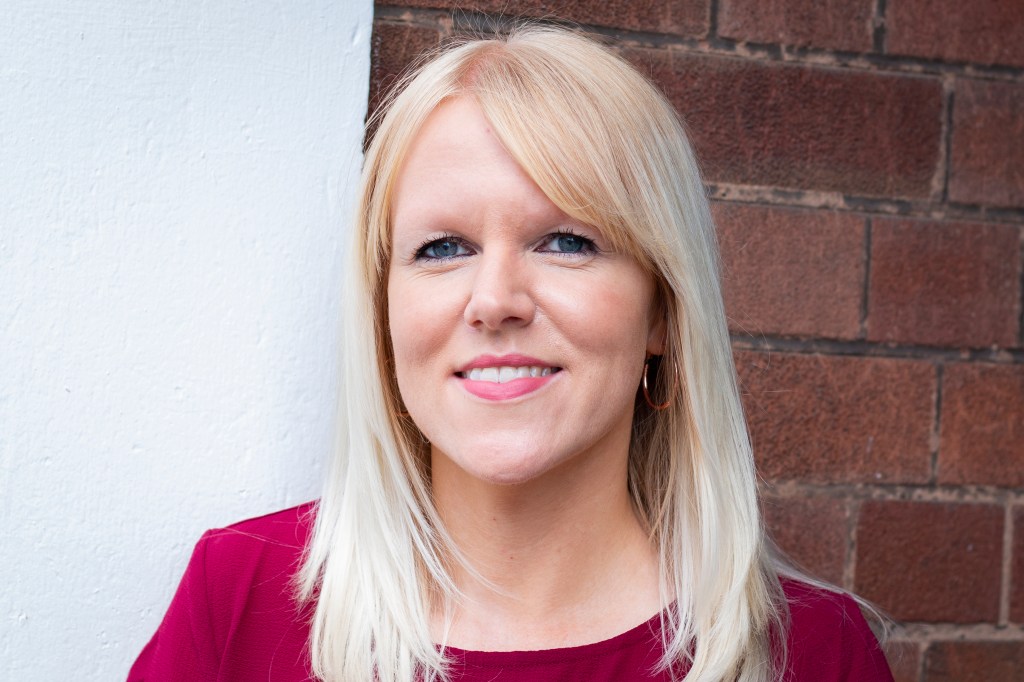
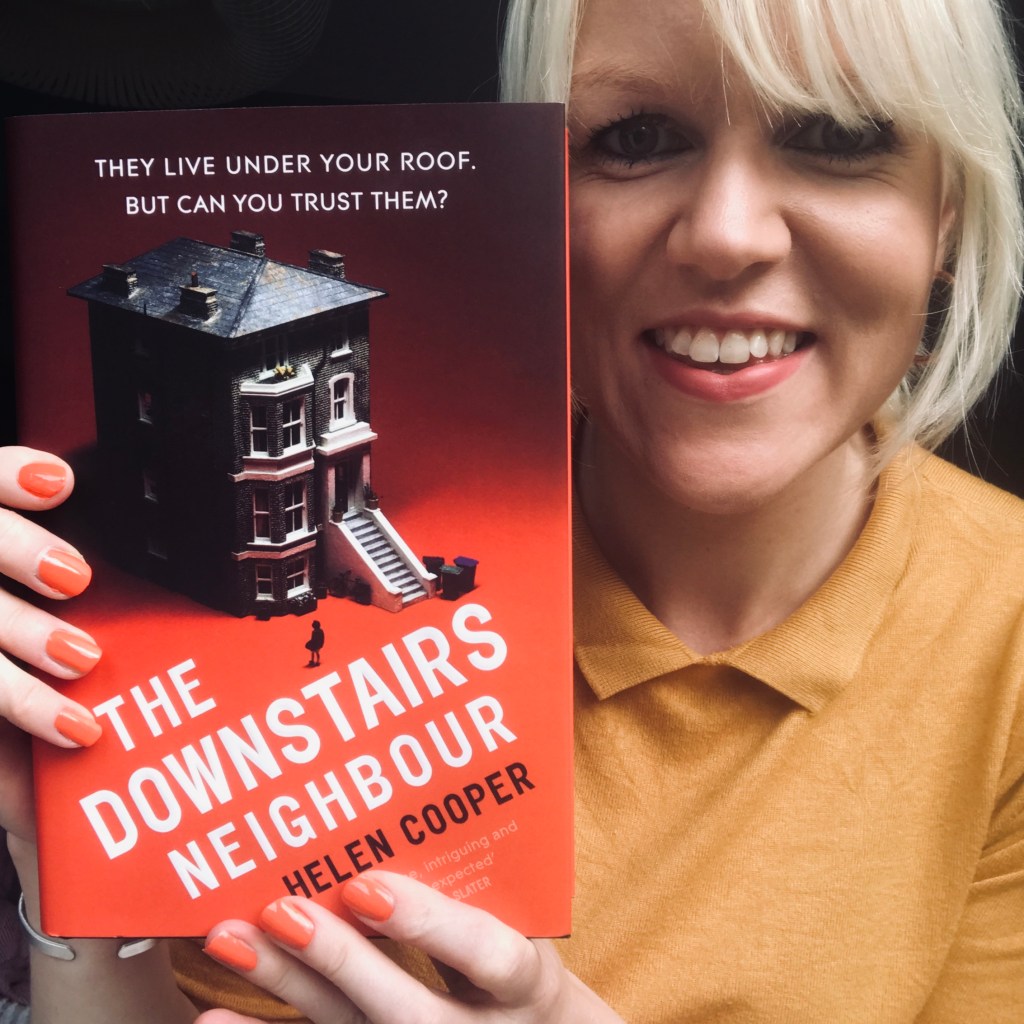
Helen Cooper is a graduate of our MA Creative Writing. Her third novel, The Couple in the Photo, was published by Hodder & Stoughton this year, and she is returning to the MA next term for a guest lecture. In this blog post, she discusses how the journey began.

People sometimes ask for my advice when they’re considering doing a MA in Creative Writing. They ask if I think it’s worth it, if it made a difference to my writing and career. I’m always cautious about advising people one way or another, because everyone’s different and there are so many factors to consider. But the truthful answer, from my point of view, is that doing the MA at NTU was one of the best decisions I made.

I started it in 2009, during a time in my life when I was deciding on my next steps. I had an English degree, was working in retail, and wrote stories in my spare time without showing them to anybody else. I wanted to do a postgrad, but the only thing that really got my heart pumping was the idea of doing an MA in Creative Writing. It felt a bit indulgent, but my family urged me to go for it, and I’m so glad they did.

There’s a long-running, sometimes controversial, debate about whether creative writing can be taught. And maybe there are some elements of it – and some elements of anything – that can’t; maybe you need a natural flair for language and storytelling. But if you have that, I strongly believe you can get much better by studying, practising, reading, reflecting, seeking feedback, and learning from more experienced writers. And for me, that process began with the MA.

During one of my first fiction seminars, as my peers and tutor Graham Joyce discussed a story I’d written, I remember having several epiphany moments. One was the realisation that showing people my writing was not as terrifying as I’d feared – in fact, hearing them talk about it as if it was worth their time was kind of lovely. And I realised you HAVE to show people your writing if you want it to work. You need insights into how your words come across, how you’re making people feel, the parts that are confusing or distracting or boring, even the parts that split the room. Those workshops taught me my first essential lesson as a writer: seek out feedback, reflect on it, then edit, edit, edit.

Learning to critique other people’s work was just as helpful. They say one of the major things a writer can do to improve is read widely. I’d always done that, but the MA showed me how to read like a writer, how to look for the craft behind the storytelling. Combine that with one-to-one meetings with a dissertation supervisor, guest lectures from industry experts, and all the extra discussions that happen before and after formal teaching, and I really did feel enriched, encouraged, and inspired. It was the first time I thought, ‘Maybe this is something I could actually pursue.’

And I did pursue it. Relentlessly! The MA was the start of my learning but it certainly wasn’t the end. Afterwards, I did some further short courses with Writing East Midlands and other local organisations; I continued in a writing group with friends I’d met on the MA; I devoured every book, magazine or blog post on writing I could find. Most significantly, I kept writing. I finished the novel I’d written for my dissertation – my first completed book – and began submitting it to agents.

That wasn’t, however, the fairytale ending! That novel got rejected more times than I care to remember. But I had some near-misses, and encouraging responses from agents about my writing. In fact, through this process, some of the things I’d been taught on the MA began to make even more sense. Know what you’re writing. Know your genre, your audience, your hook. I’d been told the importance of these things. But as I experienced the toughness of the industry first-hand, somehow it spurred me on rather than made me give up.

The third novel I wrote was the one that finally saw some success. I was teaching Academic Writing at Birmingham University by this point, and I will never forget receiving THAT email while I was halfway through giving a lecture. An agent called Hellie Ogden loved my book and wanted to take me on.

You’d be forgiven for thinking this was the fairytale ending. However, like all good stories, it wasn’t so simple. That novel went out on submission to various big publishers in 2014. Its first few rejections weren’t too troubling; they contained lots of praise, and phrases like, ‘I’m certain it’ll be snapped up elsewhere.’ Unfortunately, by the end, everyone had said the same! I was devastated, but my agent remained positive and determined, and I clung to two realisations. Firstly, several publishers had said they’d be keen to see future work; and secondly, they’d provided thoughtful feedback, which I could use. I set about a painstaking analysis of all their rejection notes. Afterwards, I knew what I needed to do next time: strengthen my ‘hook’ even further, increase the pace, and sit more firmly in the genre of psychological suspense.

The next book I wrote started from a simple scene I couldn’t get out of my head, and grew into a multi-perspective story about secretive neighbours embroiled in the disappearance of a teenager. In writing it, I drew on everything I’d learned up to this point, every piece of feedback or writing advice I’d ever had, and went all-out to try and nail it.

In September 2018, on my agent’s last day in the office before she went on maternity leave, we sold The Downstairs Neighbour to Hodder and Stoughton in a two-book deal. A few weeks later, we also sold the American rights. I now have three books published – the most recent being The Couple In The Photo, this year – and a fourth in progress. And I honestly don’t think it would’ve happened if I hadn’t written all those other books before it, starting with the one I submitted for my Creative Writing MA.

Creative writing courses aren’t magic bullets. But for me, the MA was just what I needed at the time: a chance to meet other writers, get feedback on my work, learn about the industry, learn about craft. To this day, when I’m drafting my novels, I still remind myself of a piece of advice I got from my dissertation tutor, David Belbin: “with ever chapter you write, think: what is the reader waiting to find out?” I’ve added other nuggets to that along the way – raise the stakes, my agent always says; give your characters clear goals, is one I got from my current writing group, Leicester Writers’ Club – and I’ll keep collecting them for as long as I keep writing. Striving to be a better storyteller does go beyond the length and scope of a creative writing course: it involves scribbling in notebooks, thinking in the bath, reading, being read, persevering, taking risks. But I’m not sure I would have got to this stage if I hadn’t taken that first leap.


Buy Helen’s most recent novel, The Couple in the Photo, here.

CREATIVE WRITING: NOT JUST A DEGREE

Second-year NTU BA Creative Writing student Claire Hickenbotham tells us about her experiences on the course.

The look I got when I told people I was going to university! It was a look of awe, in most cases, actually: people were impressed that I, a 39-year-old parent, was resuming education twenty years after I had left it. Body language gave away what false smiles hid. I was making all this effort to study in higher education, to give up my job, my routines, my financial stability.

Reality hit when I found myself in a classroom with people twenty years my junior. Even the lecturer appeared younger than me! I retrieved my trusty pen and paper only to find most other people now use laptops, tablets, even phones. I wondered if I could cope in this new world of online learning rooms, Teams meetings, e-books. It was all so new to me. I had two choices: to embrace it and pursue my love of writing; or to run for the hills, drop out of uni for the second time, and forgo any chance to start again – student finance wouldn’t cover a third attempt.

But, as I settled into my new life as a student, doors started opening, doors that had previously been locked, or hidden. I realised how trapped I’d been, stuck in an admin job where I spent more time watching the slow ticking clock than enjoying the mind-numbing tasks issued by my boss. All the while I had a completed novel, short stories and blog entries clogging up my PC – all unread by the public, all wasting away on a hard drive. I didn’t know what to do with them. How does an unpublished writer become published? Where do you go? Who do you speak to?

The answers became clear at uni. Not only have the workshops and seminars helped me dramatically to improve my writing, but I have been made aware of competitions, magazines submissions, volunteering opportunities, writing groups. I joined WRAP, an NTU reading and writing group, where I met fellow students with a love of literature. They gave me the courage to enter my first competition. I cried when I found out I was a winner. My piece was published, and I had the privilege of reading it on stage. I walked out trembling, terrified I’d mess it up: I was way out of my comfort zone. But the applause made it all worthwhile. My work was finally out in the world.

Since starting my degree, I’ve made lifelong friends, my confidence has soared, and my writing is better than it’s ever been. I’ve been published twice, I work as a mature student ambassador, and I volunteer at WRAP. Being part-time allows me the opportunity to get involved in activities I may not have had time for otherwise. I live twenty miles away and juggle my commute with the school run, my studies with parenting. It’s not always easy. Finding time to write can be a challenge. But I am determined to get the most out of my time at university.

Creative Writing isn’t just a degree, it’s a a leap forward, and the achievement of a lifelong dream.


A student writer in lockdown

JOHN ROGERS

Learning the craft is hard. Voice. Characterisation. Setting. Pace. All these skills must come together, push back against one another with enough resistance. Getting these forces to align is thrilling. Frustrating, excruciating even. But thrilling, nonetheless.

Unfortunately, there are forces beyond the student writer’s control. They turn up as uninvited callers, knocking at the door with heavy fists. They call themselves ‘Stressors’ and, if you don’t open up, they’ll force entry. More often than not then, front door handles get depressed. The stressors burst in with muddy boots. They walk all over the new cream carpet.

Should a writer wish to use these immediate stressors to inspire their writing, they are more than welcome to. But what happens when the world is gripped by one shared stressor, when all and sundry are plunged into lockdown? What does one write about? What does it matter?

For the more fortunate student community, the pandemic may feel more of a distant threat than other life stressors. Hopefully, no-one they know has been directly affected by this brutal virus. But even if the immediate effects remain at arm’s length, students do themselves a disservice should they say that they’re unaffected. They will soon be caught between graduand and graduate status, perhaps remaining in social distancing limbo until a vaccine is found. Anxiety bubbles, and the student writer isn’t exempt from feeling this intense pressure.

‘What you been doing?’ asks a Zoom user.

‘Not a lot. I’ve written a new poem,’ the student writer says, while cursing the third video call of the day. These started in the afternoon, slipped into evening and now infiltrate the night.

‘Oh right,’ feigning interest. ‘Just one?’

‘Yeah, I’ll do more tomorrow,’ a pledge made to the keyworkers who are working flat out, while the student writer scrapes together a few words for submission. In this context, writing seems to pale into insignificance, and that only increases the pressure to offer a more sizeable contribution.

x.

As one of the student writing community, I’m fortunate to have a release from this pressure. I have a greenhouse to escape to. Or one I’ve commandeered, at least. Every afternoon (sometime after three), I flee the confines of one space (the house) to be held by the limits of another. But there is an important distinction. The greenhouse has become my space, my thinking pod and, occasionally, my writing shed. I sit in a wearied patio chair, almost holidaying with ‘Runner Bean x’ immediately to my right. It looks as though the tray of them is blowing me a kiss, but on closer inspection the x is there to denote the number being grown. The soil level disguises how many companions I’ll have next week but, for now, six have poked their heads into the world. I sometimes think about how future novels, poems, scripts will be affected by lockdown, but more often than not I leave those thoughts at the threshold. Inside, I tend to study the runner beans, the hopeful tomato plants, the early signs of courgettes, and admire how they’re busy growing in spite of the pandemic. And the pressure eases somewhat.

There will be others who don’t have the luxury of a greenhouse. Don’t have a garden. Are isolating alone. Seem to have no escape. But a Douglas Dunn poem reminded me of the hope that we can find in humanity’s fierce spirit. Taken from a series of observations made about the lives of Hull residents, Dunn writes in ‘A Removal from Terry Street’ that a man comes out of a house ‘pushing, of all things, a lawnmower. / There is no grass in Terry Street. The worms / Come up cracks in concrete yards in moonlight. / That man, I wish him well. I wish him grass.’ The poem may have been published in the late-sixties but it still resonates. Putting aside one reading that points to the imbalance of wealth and materialism, the man emerging from his front door with a ‘lawnmower’ (despite both his and the family’s anxieties) is spectacular. He might not have been able to use it on Terry Street but hope springs eternal. He’ll carry/lug/wheel it until he finds grass and the freedom it brings. He is resilient. He won’t be beaten.

Looking for inspiration.

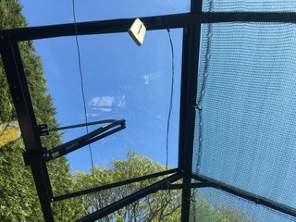
The time is 16:09. I’ve resumed my privileged position. My knowledge of runner beans is modest at best. I don’t even particularly like them. And my writing output is equally modest. But I’m not going to worry about that today. I’m going to be thankful for the thinking-pod-writing-shed-greenhouse and remind myself that’s it okay to sit. I enjoy staring through its clear skylight windows. And I hope the man with the lawnmower finds comfort. I believe that he can find release.


John Rogers is a student on the MA Creative Writing at NTU.