Creativity and the Journalistic Mindset

MEGAN TURNER, a student on the MA Creative Writing, reflects on her journey towards taking the course after an undergraduate degree at NTU and beginning a career in journalism.

I made a bold move just before I started this MA: I left my day job in the media. My writing had become stripped, stale and quite sad, and I wanted to do something about it.

Accuracy came first, and brevity was very important. All the while, my internal voice could never get louder than a whisper. Journalism trained me to strip myself from the page – to record, report, and then disappear again. It’s a valuable skill, but I wanted to find room again for myself in my writing.

Since stepping out of that industry, I have rediscovered something magical: self-expression that I don’t feel ashamed of sharing. Creative writing doesn’t ask for neutrality. I can ask my gut what it thinks. However, after relying on quotes and sources, day in and day out, the idea of writing exactly what I think felt daunting.

When watching, reading or listening to the news, there is usually one clean version of events, shaped to be understood quickly. In the real world, and in creative writing, there are as many versions as there are characters – and then usually a lot going on beneath the surface too. Points of view shift. Memories are messy. People lie – to each other and to themselves.

However, I have been finding it useful to use some of the quirks of my recent job as material, especially when remembering you’re allowed to imagine beyond what is provable.

The following things are helping me to write creatively – and perhaps they will be of some value to you:

  • Scheduling what I think of as “no-pressure writing windows”, where I am free to write something that might be so awful I never look at it again – because it also might not be. Incomplete is better than non-existent. Consistency, practicing the craft regularly, helps my ideas flow.
  • Asking “What if?” to drive my work and go on a journey with it. Imagination will take over where evidence stops.
  • Switching off my ‘inner editor’, especially during early drafts. Spelling and accuracy checks are important, but stopping my creative flow to get them done does not help.
  • Listening to real people’s speech patterns – how they interrupt, use slang, pause, and so on. I’ve been writing dialogue out loud to hear if it feels like a real person speaking naturally, not just like a soundbite.
  • Writing in multiple forms is tricky, but helpful for finding your voice. I’ve been focusing on very short stories and poetry, but I know pushing myself in different forms, like scripts and prose poetry, is also helping me find styles I suit.
  • Trusting other people’s imaginations. It’s okay to leave gaps, give half-truths and hazy recollections of stories. Creative writing isn’t a journalistic report. I’ve been trying to write with restraint to help readers contribute to how they create meaning.

I do think my journalistic mindset and training is valuable when writing ‘creative’ work. It makes me look closely at people, places and the chaos within daily life, the kinds of things that go unreported. I do miss the rush of working in a newsroom, but I am finding writing for myself, not out of duty, very enjoyable. The feeling of slowly becoming more myself and present on the page for the first time in a long time is electric. A voice I spent years hiding is finally getting louder.

STAGE STARVED

In this piece, NTU BA Creative Writing final year student LAURA DE VIVO discusses her growing interest in writing for performance, and what she learned from developing her monologue, Starved, and watching an actor perform it.

When I came to university to study for a creative writing degree, I hadn’t expected to gain a love for theatre. Nonetheless, in my first year I answered a call from Message in a Bottle Monologues for five-minute pieces on the theme of darkness. I was honoured to receive a spot and my piece, ‘The Demon in my Head’, a personification of my medical condition, found a voice. Then I sat mesmerised on the front row the night it was performed, in awe of the actor, and the fact that he was speaking words I’d written. I almost couldn’t watch, but it received such a positive response that by the time I left the theatre I was hooked on writing for performance.

So, earlier this year, when the opportunity to take part in a monologue workshop and have a one-to-one with the playwright Sara Bodinar came up, I couldn’t turn it down, despite my third-year workload. It was the chance I’d waited for to bring Collette Dubois to life: she had lived quietly for years on my hard drive, waiting for embodiment. Everyone at the workshop approved of her, and that was all the encouragement I needed.  

Collette is a vampire, and unrelatable in many ways, yet she faces a decision we can all understand: what would you sacrifice for love, and how do you battle with its turmoil?

I could barely hold myself still on the tram home, desperate to find my laptop and write – to lift her from the pages of a short story and give her new life, ironic considering she’s been dead for two hundred years.

During my one-to-one with Bodinar, I came to understand more fully that a monologue is a story, it often has three acts, needs foreshadowing and flashback, and is not just a rant by a character at an audience. After our meeting, I finalised the piece, sent it in, and crossed my fingers. I would not see it again until the night of the performance at Nottingham Contemporary. I tried my best to forget about it.

The evening soon arrived and, along with my family, I joined the other writers and supporters. Not knowing the actor who would play Collette, I was unable to give advice on how I felt she should be portrayed. This was an important lesson: was my skill as a writer good enough to ensure her character would shine through without my further intervention? Time would tell.

I rarely do anything without Claire Suzanne, a friend on the BA Creative Writing. Her piece, ‘Nearly Normal’, was the first to be announced. As the actress moved about the stage I could hear Claire in every word: hers was a personal piece. I had approached the task very differently.

More monologues followed. I waited, my hands becoming clammy, and the room felt like it was close to boiling point. Finally, I saw a beautiful woman with sweeping red hair and a claret dress, and I knew in my blood that that was her. The poor man tasked with being a dead body (my piece required it) was also a giveaway, and I laughed knowing what was in store for him. This was toned down from my original script, and for good reason: I’m sure he’d not signed up to be given bruises.

Ria, as I learned she was called, gave a brilliant depiction of a ‘starved’ predatory monster, though not quite how I had imagined her. This meant I had some work to do if Collette was to be portrayed how I had her in my head – though it was also a thrill to see an actor bring her creativity to my creation. It was an honour to have another piece performed, and this has cemented my desire to push my writing career towards the theatre.

After each performance, the writer responsible was revealed to the audience and actors, but we all had to wait until it was over to meet each other. Ria is a wonderful lady and actress and the connection we made was encouraging.

Laura (left) with Ria.

As an aspirational playwright, I find this type of opportunity important. It provides an outlet to help push my words out into the world, and gave me immediate answers regarding what works and what doesn’t.

You also do not know who may be attending events like this, of course, and it only takes one chance meeting to give an idea legs. NTU has been great help and support throughout my BA, and I would not have been exposed to these opportunities without it. As I move towards my MA Creative Writing at NTU, I will be looking for further chances to write for performance.


FRIENDS FOR LIFE AT NTU: FORTY-SOMETHINGS CAN HAVE SOCIAL LIVES TOO!

Claire Suzanne and Laura De Vivo met when they started the BA Creative Writing at NTU in 2022. Here, they reflect on joining the course, and on an enduring friendship.

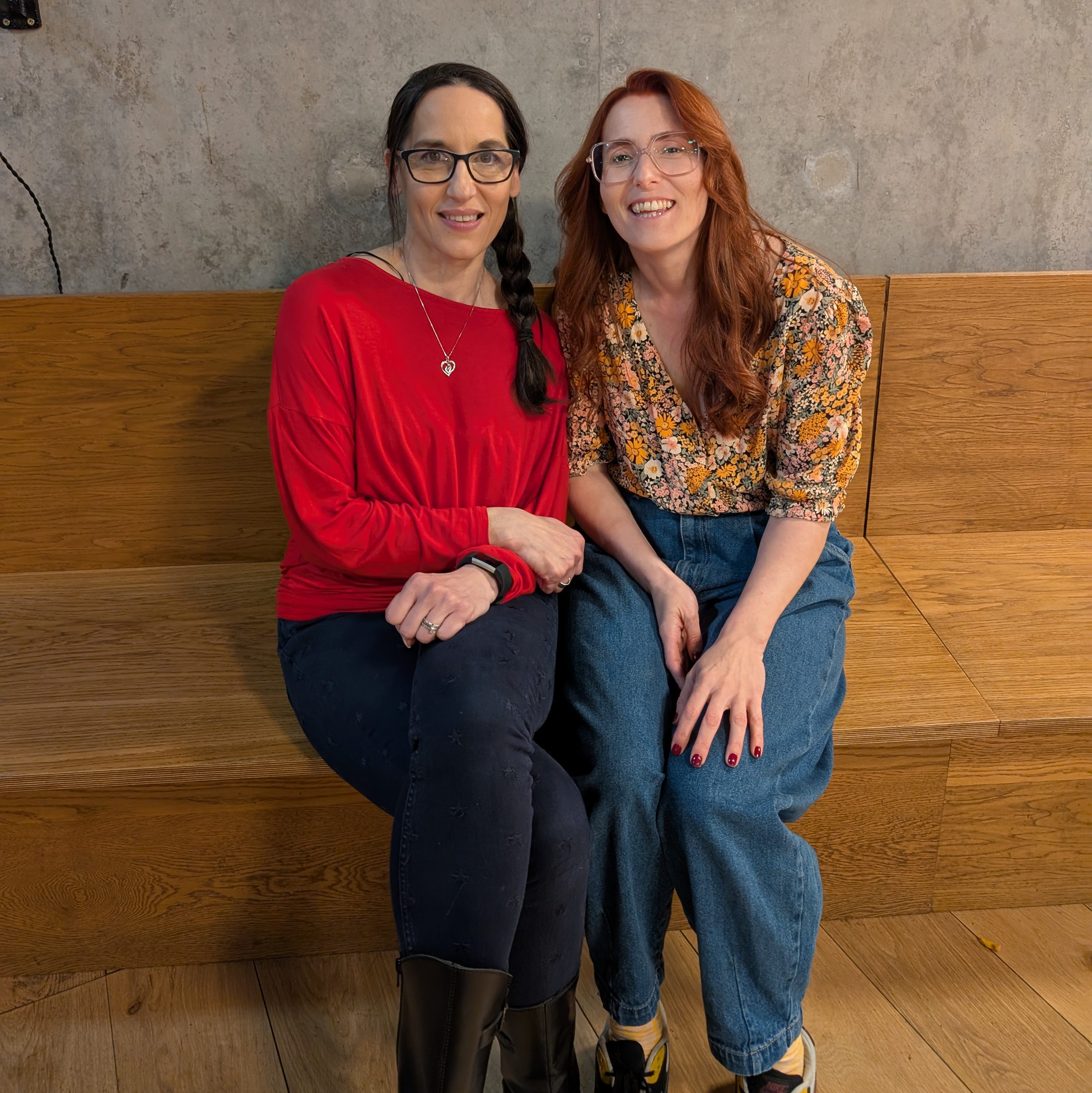
Claire and Laura, arms around one another, looking at the camera. Laura wears a Nottingham Forest shirt, and Claire holds a Notts County certificate.
Laura (left) and Claire (right). Both are Premier League, in our opinion.

It was Open Day, January 2022. I remember it well, squinting in the sun as I pulled into the Clifton Campus car park for the first time.

I’d driven twenty miles to get there and was surprised to find the drive quite relaxing. I turned off my trusty sat nav and followed the directions to the Pavilion building, where my first port of call awaited – a free cuppa! I browsed the vibrant pink stands, chatting to friendly staff and feeling a happy, welcoming vibe, before finding what I was really there for: the BA Creative Writing taster session.

Prospective students chatted loudly, yet the atmosphere was peaceful. It wasn’t a big lecture theatre like I had imagined at uni, a place where I would be lost in the crowd, just a number, unknown to lecturers. No, NTU seemed different, and I became increasingly hopeful that the uni I’d written off as being too far from home could be a reality for me after all.

This was confirmed when I noticed… another mature student. She was at the front, me at the back, yet we both put our hands up to ask the same question: ‘Are there many mature students on the course?’

Like me, Laura had been out of education for a long time, and we hit it off immediately. After pairing up for our poetry task, ‘I come from’, we found out we were both parents, in the same age bracket, and that we’d had a similar life experience.

Afterwards, we headed over to the refectory for another free cuppa, where we exchanged numbers. Chatting to Laura was natural, authentic – it felt like we’d known each other for years. ‘You’d better choose NTU,’ she said before she left.

Her words resonated as I sat on a bench, later on that warm winter’s day, surrounded by trees and cradling my third cuppa. I distinctly remember looking around at the clean, modern, sunlit campus and feeling content that this was it, NTU was where I wanted to be. So, I rang my husband.

‘I love it!’ I squealed down the phone.

Before I knew it, I was enrolled – I was a uni student about to embark on what I knew would be a challenging but exciting journey to my degree. Laura and I got on like a house on fire and another student, Sam, regularly joined us for lunch. Sam is twenty years younger than us, but, at uni, age doesn’t matter. Like when the campus SU venue The Point was playing 90s music and Sam laughed when I told him I had the single on cassette!

As well as for lunch, Laura and I regularly met for a pre-lecture coffee after a hectic school run. We laughed together, moaned together, shared ideas and gave feedback on each other’s work. We were similar in our determination to succeed: both perfectionists, chasing a First in every assignment and revelling in the fact that, for the first time ever, we’d both found where we wanted to be. We even shared the same interests, hitting the gym in our joint determination not to age gracefully, and we joined WRAP, the university-wide reading and writing group, where we were published and read our work to an audience – something I thought I would never do, but being with a friend made everything easier.

When I was on campus with Laura, I wasn’t just a mother, just a wife, cleaner, tidier, payer of bills. At uni I could be me, the version of me that hadn’t been through years of stress and burnout. I was young again.

Laura will graduate this summer, whereas I will stay on as a part time student. It will be strange not seeing her around campus anymore. But I know she will be successful, wherever the future takes her. And I know I have made a friend for life at uni, something I didn’t think would happen when I was a forty-year-old first year!

CLAIRE SUZANNE

I had been checking, checking and re-checking my email for weeks. What I was expecting to see was something like ‘Sorry you don’t fit the criteria for our university,’ because I am an introvert, always convinced I will lose out. And then there it was, and all I had to do was open it and I’d know. I paced my living room a few times, hands on my head, as I waited for my dream to come crashing down on top of me. I clicked the email open and instead saw a big green circle saying congratulations.

I’d done it! My foot was in the door, so now I needed to have a good look at the place. I pulled in the car park, my husband and children in the car with me, and as much as I wanted to share this with them, I needed to do it alone. I watched the car drive away, leaving me standing there.

With my heart pounding I walked in the direction of the Pavilion – my new dress, bought for the occasion, billowing in the wind. I joined the queue of young people entering the building, many with their parents, and was handed a pink NTU tote bag filled with information. I quickly found the room I needed for the Creative Writing chat, slid into an empty seat, and waited. Everyone looked so young, I thought. I must be insane.

More people sheepishly arrived and found seats at tables that were empty. Everyone seemed to look a bit nervous. Then the lecturer, Anthony Cropper, appeared in his glasses, loud shirt and big smile [editor’s note: judge for yourself here!], and I quickly warmed to him. He introduced us to a poem exercise he called ‘Where I come from’, and said it was important we paired up. I had spotted a lady behind me and asked if she might like to work with me.

That was the start of it, and soon it felt like I’d known Claire my whole life. Later that day, we shared lots of facts about ourselves, the many hats we wear and how big this dream was. We both needed practical answers and so went in hunt of lecturers to ask our multitude of similar questions.

Just as we were about to leave, I asked if she’d like to swap numbers and learnt she had other options open to her. I didn’t, and I’d found someone I already knew I didn’t want to lose. ‘Make sure you chose NTU!’, I joked.

A few days later, Claire texted, telling me she’d chosen NTU. I was ecstatic. Now I knew I could do it. On our first day we found our spot in class, our spot on the balcony, our spot in the refectory. Over the first few weeks we found that some other students migrated towards us, and us to them. Slowly, Sam became one of our little group of fast friends, and it has remained so for three years. A lecturer refers to us as the Thrilling Three, a title I’m happy to take!

Life at uni as a mature student has been made wonderful by making friends. At our induction we were told, jokingly: ‘look at the person next to you, they might be at your wedding’. I’m married, so that won’t be the case for me. But in a place where I didn’t expect to find anyone, I found people who will be me my friends for life. And that has helped to make this life-altering decision priceless.

LAURA DE VIVO

A student writer in lockdown

JOHN ROGERS

Learning the craft is hard. Voice. Characterisation. Setting. Pace. All these skills must come together, push back against one another with enough resistance. Getting these forces to align is thrilling. Frustrating, excruciating even. But thrilling, nonetheless.

Unfortunately, there are forces beyond the student writer’s control. They turn up as uninvited callers, knocking at the door with heavy fists. They call themselves ‘Stressors’ and, if you don’t open up, they’ll force entry. More often than not then, front door handles get depressed. The stressors burst in with muddy boots. They walk all over the new cream carpet.

Should a writer wish to use these immediate stressors to inspire their writing, they are more than welcome to. But what happens when the world is gripped by one shared stressor, when all and sundry are plunged into lockdown? What does one write about? What does it matter?

For the more fortunate student community, the pandemic may feel more of a distant threat than other life stressors. Hopefully, no-one they know has been directly affected by this brutal virus. But even if the immediate effects remain at arm’s length, students do themselves a disservice should they say that they’re unaffected. They will soon be caught between graduand and graduate status, perhaps remaining in social distancing limbo until a vaccine is found. Anxiety bubbles, and the student writer isn’t exempt from feeling this intense pressure.

‘What you been doing?’ asks a Zoom user.

‘Not a lot. I’ve written a new poem,’ the student writer says, while cursing the third video call of the day. These started in the afternoon, slipped into evening and now infiltrate the night.

‘Oh right,’ feigning interest. ‘Just one?’

‘Yeah, I’ll do more tomorrow,’ a pledge made to the keyworkers who are working flat out, while the student writer scrapes together a few words for submission. In this context, writing seems to pale into insignificance, and that only increases the pressure to offer a more sizeable contribution.

x.

As one of the student writing community, I’m fortunate to have a release from this pressure. I have a greenhouse to escape to. Or one I’ve commandeered, at least. Every afternoon (sometime after three), I flee the confines of one space (the house) to be held by the limits of another. But there is an important distinction. The greenhouse has become my space, my thinking pod and, occasionally, my writing shed. I sit in a wearied patio chair, almost holidaying with ‘Runner Bean x’ immediately to my right. It looks as though the tray of them is blowing me a kiss, but on closer inspection the x is there to denote the number being grown. The soil level disguises how many companions I’ll have next week but, for now, six have poked their heads into the world. I sometimes think about how future novels, poems, scripts will be affected by lockdown, but more often than not I leave those thoughts at the threshold. Inside, I tend to study the runner beans, the hopeful tomato plants, the early signs of courgettes, and admire how they’re busy growing in spite of the pandemic. And the pressure eases somewhat.

There will be others who don’t have the luxury of a greenhouse. Don’t have a garden. Are isolating alone. Seem to have no escape. But a Douglas Dunn poem reminded me of the hope that we can find in humanity’s fierce spirit. Taken from a series of observations made about the lives of Hull residents, Dunn writes in ‘A Removal from Terry Street’ that a man comes out of a house ‘pushing, of all things, a lawnmower. / There is no grass in Terry Street. The worms / Come up cracks in concrete yards in moonlight. / That man, I wish him well. I wish him grass.’ The poem may have been published in the late-sixties but it still resonates. Putting aside one reading that points to the imbalance of wealth and materialism, the man emerging from his front door with a ‘lawnmower’ (despite both his and the family’s anxieties) is spectacular. He might not have been able to use it on Terry Street but hope springs eternal. He’ll carry/lug/wheel it until he finds grass and the freedom it brings. He is resilient. He won’t be beaten.

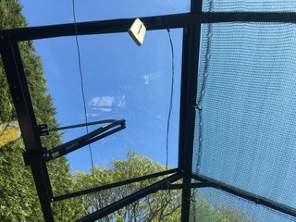
Looking for inspiration.

The time is 16:09. I’ve resumed my privileged position. My knowledge of runner beans is modest at best. I don’t even particularly like them. And my writing output is equally modest. But I’m not going to worry about that today. I’m going to be thankful for the thinking-pod-writing-shed-greenhouse and remind myself that’s it okay to sit. I enjoy staring through its clear skylight windows. And I hope the man with the lawnmower finds comfort. I believe that he can find release.


John Rogers is a student on the MA Creative Writing at NTU.