CLAIRE SUZANNE, a mature student on the BA Creative Writing at NTU, discusses fear and the joy and benefits of overcoming it.
Do something that scares you – a phrase I’d heard many times, but I’d never listened. I was the mute child, the socially awkward teenager, the adult who had nightmares about public speaking. I would shy away from the limelight, tucking myself into my homemade office, where I would create fictional worlds that allowed me to be the confident person I always longed to be. But that was before I came to NTU. At uni, I pushed the boundaries and left my comfort zone. At uni, I would no longer be a fictional character.
Bring on year two at NTU, wrap up some Bad Betty Poets, throw in a stage, sprinkle some students on top and what was I doing for my 41st birthday? Reading poetry to an audience, of course! The opportunity arose through WRAP – an extracurricular reading and writing group where I volunteer as an ambassador. WRAP was collaborating with Bad Betty, a poetry publisher that was offering one-to-one mentoring with published poets and performers. The opportunity was open to all NTU students, regardless of course or level of study, and I was surprised to find it wasn’t just Creative Writing students who wrote poetry in their spare time. I was the opposite: a Creative Writing student who did not write poetry in her spare time! This, then, was the perfect opportunity for me to find out if there was a poet hiding inside somewhere, waiting to be let loose.
My mentor, Molly, was amazing. Not only were we the same age, but we also had a similar sense of humour. Her poetry made me smile, especially her references to Dawson’s Creek, traffic jams, and finding the ability to be your genuine self, all of which were relatable. Yet when it came to picking themes for my own poems, my mind went blank. All I knew was that I didn’t want to depress the audience, I wanted to entertain. Then I realised I had to talk about my fear of aging – grey hair, wrinkles, and the dreaded menopause. After all, the reading was taking place on the day I officially became ‘over forty’.
Being on stage was no longer a new experience for me, I’d already read two pieces of prose at the Metronome. But those pieces had won competitions, they had been vetted, judged as ‘good writing’, which gave me the confidence to read them. But my poetry, that was new, it was unheard, it was… uncharted territory! I had nothing to compare it to, and I’d certainly never read my poems to an audience before.
My legs moved in slow motion as I approached the stage, but as far as I was concerned the walk to the microphone could last forever. Then I was there, facing my audience, their faces blurred by lights. My heart bashed against my ribs, and my clammy hands created wet imprints into the piece of paper I was holding. The room was silent, yet the slightest cough or mutter rang in my ears to let me know the audience was waiting.
Then I did something that scared me, and it paid off. To hear the audience laughing and applauding made it all worthwhile. Was the poem metaphorical? Not really. Did it rhyme? Yes. Could I write poetry for kids? Probably. But the most important thing was the experience. An experience inaccessible to me before I started at NTU, and one I will never forget, whatever future successes I might have.
Leah Jackson, a first-year BA Creative Writing student, went to Paris and Florence, and came back full of ideas.
Many writers tend to struggle with ‘writer’s block’ – it is even the subject of a recent post on this blog. This term may be used when a writer feels lost and insecure in their ideas and projects because of a lack of motivation and inspiration. However, I believe this need never be permanent, as I have discovered a way to combat it: go and see something new, if you can!
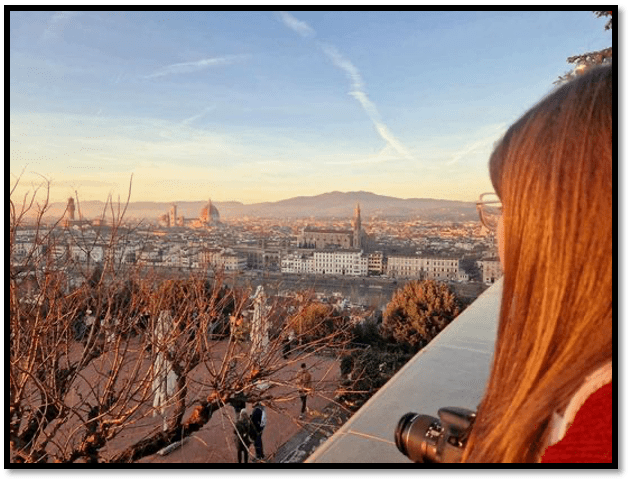
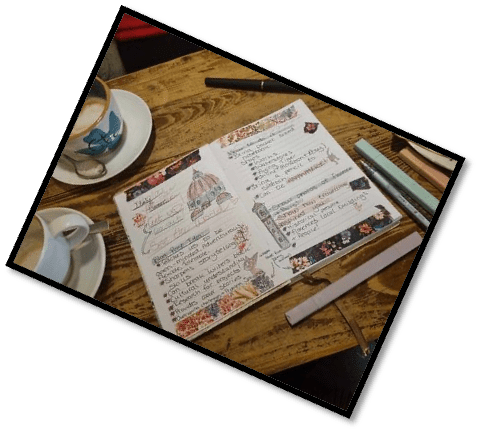
Throughout 2023, I was very grateful to find myself experiencing lots of opportunities to travel. I visited Paris with my college friends in February, and saved up my money to visit Florence for a week in December with a close family member. Every time I was traveling to a new area, I noticed my inspiration was like a bouncy ball of energy in my head, whizzing around full of creative ideas. I had never received that kind of inspiration when staying in my safe university hall bedroom). Breaking out of my comfort zone filled me with refreshing and exciting ideas I would never otherwise have added to my writing journal. Not only that, but it was also helpful to my research for my writing.
When I travelled to Paris, I was captivated by the beautiful city and the fashionable people I walked past. The architecture was extravagant compared to what I was used to. I found myself writing a lot of thoughts down in my journal during my time there. The building in this photo got me thinking creatively: I wondered whether this was an apartment building, and if so, who might live there? Is that person good? What is their occupation? Do they ever leave the building?
I hadn’t travelled outside of the UK since the age of eight, and I remember being scared at first to leave the country without my family. However, I soon found that it transformed my mind to become more flexible, adventurous and open to understanding other ways of living, and I wasn’t scared anymore, just eager to explore. Writing in an unfamiliar but gorgeous city helped me to sharpen my storytelling skills and experiment with unique characters based on strangers I met or observed. Looking back, these characters were the most authentic and unique I had ever written. Writing had become exciting again.
I had been most comfortable writing scripts in the genre of dark comedy. However, when traveling to Florence, I found my new love for writing romance when seeing the historical sculptures and magnificent Florentine buildings. I had never found these types of romantic ideas before anywhere else. The famous historical geniuses that had built and lived in the breathtaking city also left me questioning what life may have been like here during the Renaissance.
My mind was full of curiosities. Did Leonardo Da Vinci used to sit where I am sitting and think about his next painting? What was Michelangelo thinking when sculpting his famous David? Was it painful work? What was it like to be a member of the Medici family – or one of their servants? Thinking about this made me realize history can also provide a lot of inspiration. Traveling to Florence helped me to gain inspiration for characters and experiment with a new genre I had never tried writing in before.
If you ever find yourself lost for ideas, then, I strongly recommend pushing yourself to break your comfort zone, to widen your mind to what the outside world has to offer. This doesn’t have to involve traveling abroad – it could be going for a walk to your local cafe or nearby forest, traveling to a part of your country you’ve never visited before, or going out of your way to meet new people you would never find in your usual friendship group. By doing this you are improving your writing skills with new knowledge. If you are in Nottingham, you have wonderful places to explore all around you. Getting yourself out there, whether it is your back garden or another country, can always help refresh those creative thoughts and stave off the dreaded ‘writer’s block’.
Here are some tips that can help you keep these new special ideas safe:
Always carry a pocket or bag-friendly notebook with you, I usually carry around an A5 journal and this can fit in my small satchel bag! This makes it easier to travel with.
Always bring a pencil or a pen. If you would like to make it more fun, some colourful highlighters or different coloured gel pens, stickers and washing tapes can be used to spice up your pages in your writing journal. (This can also make the ideas more memorable for you!)
A small laptop or iPad can also be used if you prefer to type up your ideas instead of writing them traditionally. I prefer the latter, but we’re all different.
If you do ever find yourself having a boost of inspiration and you happen to have forgotten your notebook and stationery, you can obviously also use your phone’s ‘Notes’ app, and jot them down in your journal later.
Buy yourself a professional camera or use your phone camera to capture whatever inspires you! Then you can always come back to that photo and brainstorm even more ideas. The photos in this blog post have mostly been taken on my recent travels. Using photography to boost inspiration can also be effective.
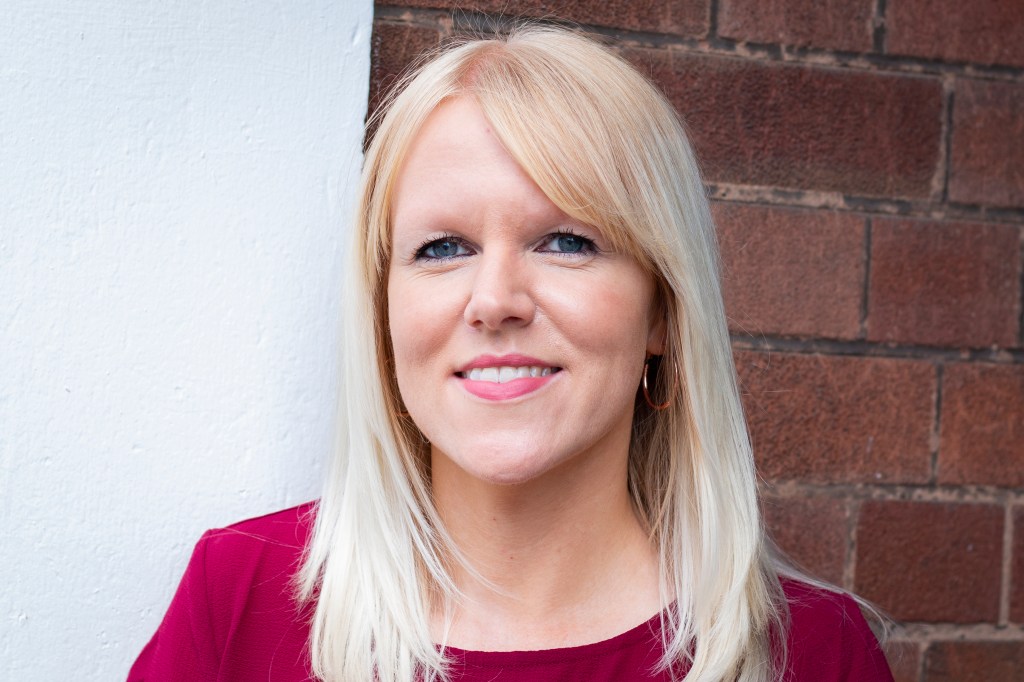
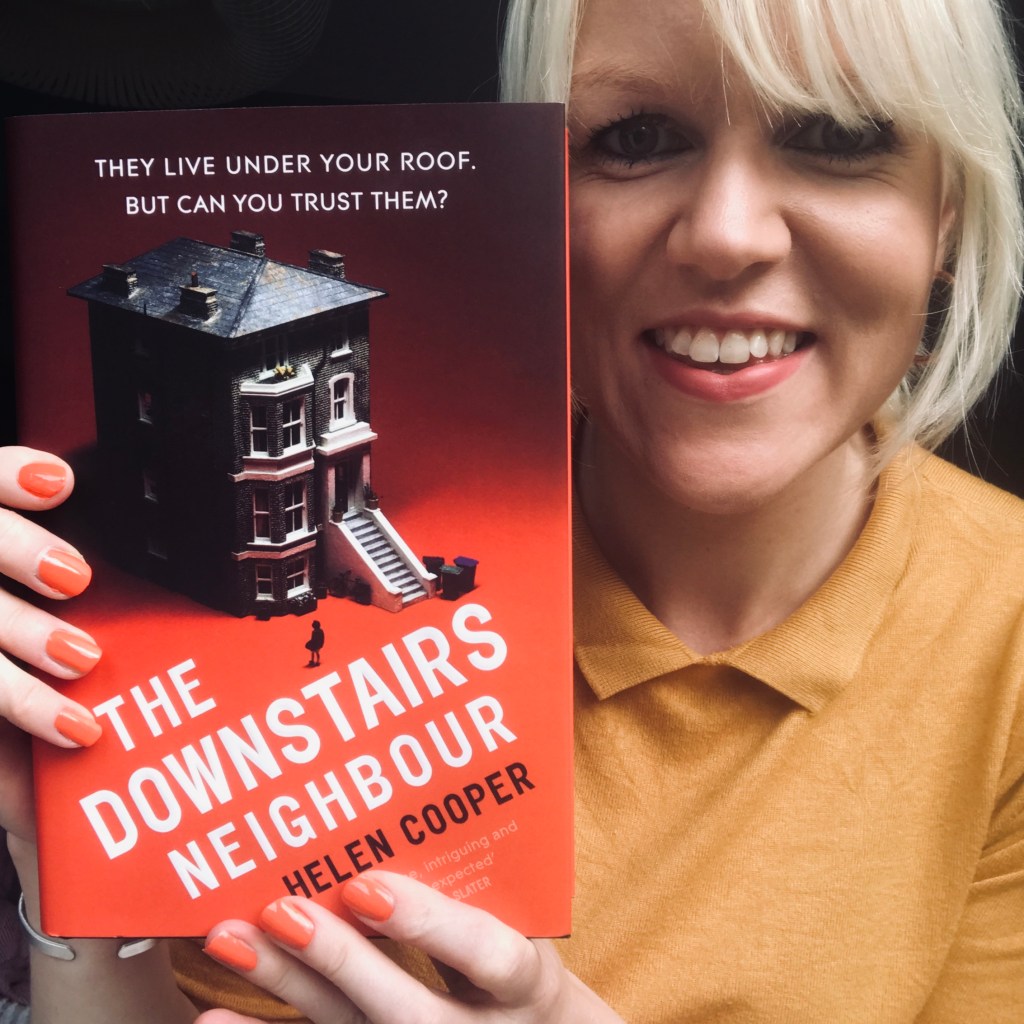
Helen Cooper is a graduate of our MA Creative Writing. Her third novel, The Couple in the Photo, was published by Hodder & Stoughton this year, and she is returning to the MA next term for a guest lecture. In this blog post, she discusses how the journey began.
People sometimes ask for my advice when they’re considering doing a MA in Creative Writing. They ask if I think it’s worth it, if it made a difference to my writing and career. I’m always cautious about advising people one way or another, because everyone’s different and there are so many factors to consider. But the truthful answer, from my point of view, is that doing the MA at NTU was one of the best decisions I made.
I started it in 2009, during a time in my life when I was deciding on my next steps. I had an English degree, was working in retail, and wrote stories in my spare time without showing them to anybody else. I wanted to do a postgrad, but the only thing that really got my heart pumping was the idea of doing an MA in Creative Writing. It felt a bit indulgent, but my family urged me to go for it, and I’m so glad they did.
There’s a long-running, sometimes controversial, debate about whether creative writing can be taught. And maybe there are some elements of it – and some elements of anything – that can’t; maybe you need a natural flair for language and storytelling. But if you have that, I strongly believe you can get much better by studying, practising, reading, reflecting, seeking feedback, and learning from more experienced writers. And for me, that process began with the MA.
During one of my first fiction seminars, as my peers and tutor Graham Joyce discussed a story I’d written, I remember having several epiphany moments. One was the realisation that showing people my writing was not as terrifying as I’d feared – in fact, hearing them talk about it as if it was worth their time was kind of lovely. And I realised you HAVE to show people your writing if you want it to work. You need insights into how your words come across, how you’re making people feel, the parts that are confusing or distracting or boring, even the parts that split the room. Those workshops taught me my first essential lesson as a writer: seek out feedback, reflect on it, then edit, edit, edit.
Learning to critique other people’s work was just as helpful. They say one of the major things a writer can do to improve is read widely. I’d always done that, but the MA showed me how to read like a writer, how to look for the craft behind the storytelling. Combine that with one-to-one meetings with a dissertation supervisor, guest lectures from industry experts, and all the extra discussions that happen before and after formal teaching, and I really did feel enriched, encouraged, and inspired. It was the first time I thought, ‘Maybe this is something I could actually pursue.’
And I did pursue it. Relentlessly! The MA was the start of my learning but it certainly wasn’t the end. Afterwards, I did some further short courses with Writing East Midlands and other local organisations; I continued in a writing group with friends I’d met on the MA; I devoured every book, magazine or blog post on writing I could find. Most significantly, I kept writing. I finished the novel I’d written for my dissertation – my first completed book – and began submitting it to agents.
That wasn’t, however, the fairytale ending! That novel got rejected more times than I care to remember. But I had some near-misses, and encouraging responses from agents about my writing. In fact, through this process, some of the things I’d been taught on the MA began to make even more sense. Know what you’re writing. Know your genre, your audience, your hook. I’d been told the importance of these things. But as I experienced the toughness of the industry first-hand, somehow it spurred me on rather than made me give up.
The third novel I wrote was the one that finally saw some success. I was teaching Academic Writing at Birmingham University by this point, and I will never forget receiving THAT email while I was halfway through giving a lecture. An agent called Hellie Ogden loved my book and wanted to take me on.
You’d be forgiven for thinking this was the fairytale ending. However, like all good stories, it wasn’t so simple. That novel went out on submission to various big publishers in 2014. Its first few rejections weren’t too troubling; they contained lots of praise, and phrases like, ‘I’m certain it’ll be snapped up elsewhere.’ Unfortunately, by the end, everyone had said the same! I was devastated, but my agent remained positive and determined, and I clung to two realisations. Firstly, several publishers had said they’d be keen to see future work; and secondly, they’d provided thoughtful feedback, which I could use. I set about a painstaking analysis of all their rejection notes. Afterwards, I knew what I needed to do next time: strengthen my ‘hook’ even further, increase the pace, and sit more firmly in the genre of psychological suspense.
The next book I wrote started from a simple scene I couldn’t get out of my head, and grew into a multi-perspective story about secretive neighbours embroiled in the disappearance of a teenager. In writing it, I drew on everything I’d learned up to this point, every piece of feedback or writing advice I’d ever had, and went all-out to try and nail it.
In September 2018, on my agent’s last day in the office before she went on maternity leave, we sold The Downstairs Neighbour to Hodder and Stoughton in a two-book deal. A few weeks later, we also sold the American rights. I now have three books published – the most recent being The Couple In The Photo, this year – and a fourth in progress. And I honestly don’t think it would’ve happened if I hadn’t written all those other books before it, starting with the one I submitted for my Creative Writing MA.
Creative writing courses aren’t magic bullets. But for me, the MA was just what I needed at the time: a chance to meet other writers, get feedback on my work, learn about the industry, learn about craft. To this day, when I’m drafting my novels, I still remind myself of a piece of advice I got from my dissertation tutor, David Belbin: “with ever chapter you write, think: what is the reader waiting to find out?” I’ve added other nuggets to that along the way – raise the stakes, my agent always says; give your characters clear goals, is one I got from my current writing group, Leicester Writers’ Club – and I’ll keep collecting them for as long as I keep writing. Striving to be a better storyteller does go beyond the length and scope of a creative writing course: it involves scribbling in notebooks, thinking in the bath, reading, being read, persevering, taking risks. But I’m not sure I would have got to this stage if I hadn’t taken that first leap.
Second-year NTU BA Creative Writing student Claire Hickenbotham tells us about her experiences on the course.
The look I got when I told people I was going to university! It was a look of awe, in most cases, actually: people were impressed that I, a 39-year-old parent, was resuming education twenty years after I had left it. Body language gave away what false smiles hid. I was making all this effort to study in higher education, to give up my job, my routines, my financial stability.
Reality hit when I found myself in a classroom with people twenty years my junior. Even the lecturer appeared younger than me! I retrieved my trusty pen and paper only to find most other people now use laptops, tablets, even phones. I wondered if I could cope in this new world of online learning rooms, Teams meetings, e-books. It was all so new to me. I had two choices: to embrace it and pursue my love of writing; or to run for the hills, drop out of uni for the second time, and forgo any chance to start again – student finance wouldn’t cover a third attempt.
But, as I settled into my new life as a student, doors started opening, doors that had previously been locked, or hidden. I realised how trapped I’d been, stuck in an admin job where I spent more time watching the slow ticking clock than enjoying the mind-numbing tasks issued by my boss. All the while I had a completed novel, short stories and blog entries clogging up my PC – all unread by the public, all wasting away on a hard drive. I didn’t know what to do with them. How does an unpublished writer become published? Where do you go? Who do you speak to?
The answers became clear at uni. Not only have the workshops and seminars helped me dramatically to improve my writing, but I have been made aware of competitions, magazines submissions, volunteering opportunities, writing groups. I joined WRAP, an NTU reading and writing group, where I met fellow students with a love of literature. They gave me the courage to enter my first competition. I cried when I found out I was a winner. My piece was published, and I had the privilege of reading it on stage. I walked out trembling, terrified I’d mess it up: I was way out of my comfort zone. But the applause made it all worthwhile. My work was finally out in the world.
Since starting my degree, I’ve made lifelong friends, my confidence has soared, and my writing is better than it’s ever been. I’ve been published twice, I work as a mature student ambassador, and I volunteer at WRAP. Being part-time allows me the opportunity to get involved in activities I may not have had time for otherwise. I live twenty miles away and juggle my commute with the school run, my studies with parenting. It’s not always easy. Finding time to write can be a challenge. But I am determined to get the most out of my time at university.
Creative Writing isn’t just a degree, it’s a a leap forward, and the achievement of a lifelong dream.
Learning the craft is hard. Voice. Characterisation. Setting. Pace. All these skills must come together, push back against one another with enough resistance. Getting these forces to align is thrilling. Frustrating, excruciating even. But thrilling, nonetheless.
Unfortunately, there are forces beyond the student writer’s control. They turn up as uninvited callers, knocking at the door with heavy fists. They call themselves ‘Stressors’ and, if you don’t open up, they’ll force entry. More often than not then, front door handles get depressed. The stressors burst in with muddy boots. They walk all over the new cream carpet.
Should a writer wish to use these immediate stressors to inspire their writing, they are more than welcome to. But what happens when the world is gripped by one shared stressor, when all and sundry are plunged into lockdown? What does one write about? What does it matter?
For the more fortunate student community, the pandemic may feel more of a distant threat than other life stressors. Hopefully, no-one they know has been directly affected by this brutal virus. But even if the immediate effects remain at arm’s length, students do themselves a disservice should they say that they’re unaffected. They will soon be caught between graduand and graduate status, perhaps remaining in social distancing limbo until a vaccine is found. Anxiety bubbles, and the student writer isn’t exempt from feeling this intense pressure.
‘What you been doing?’ asks a Zoom user.
‘Not a lot. I’ve written a new poem,’ the student writer says, while cursing the third video call of the day. These started in the afternoon, slipped into evening and now infiltrate the night.
‘Oh right,’ feigning interest. ‘Just one?’
‘Yeah, I’ll do more tomorrow,’ a pledge made to the keyworkers who are working flat out, while the student writer scrapes together a few words for submission. In this context, writing seems to pale into insignificance, and that only increases the pressure to offer a more sizeable contribution.
x.
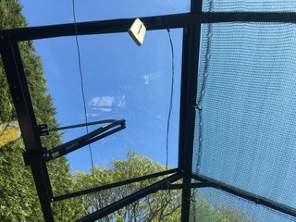
As one of the student writing community, I’m fortunate to have a release from this pressure. I have a greenhouse to escape to. Or one I’ve commandeered, at least. Every afternoon (sometime after three), I flee the confines of one space (the house) to be held by the limits of another. But there is an important distinction. The greenhouse has become my space, my thinking pod and, occasionally, my writing shed. I sit in a wearied patio chair, almost holidaying with ‘Runner Bean x’ immediately to my right. It looks as though the tray of them is blowing me a kiss, but on closer inspection the x is there to denote the number being grown. The soil level disguises how many companions I’ll have next week but, for now, six have poked their heads into the world. I sometimes think about how future novels, poems, scripts will be affected by lockdown, but more often than not I leave those thoughts at the threshold. Inside, I tend to study the runner beans, the hopeful tomato plants, the early signs of courgettes, and admire how they’re busy growing in spite of the pandemic. And the pressure eases somewhat.
There will be others who don’t have the luxury of a greenhouse. Don’t have a garden. Are isolating alone. Seem to have no escape. But a Douglas Dunn poem reminded me of the hope that we can find in humanity’s fierce spirit. Taken from a series of observations made about the lives of Hull residents, Dunn writes in ‘A Removal from Terry Street’ that a man comes out of a house ‘pushing, of all things, a lawnmower. / There is no grass in Terry Street. The worms / Come up cracks in concrete yards in moonlight. / That man, I wish him well. I wish him grass.’ The poem may have been published in the late-sixties but it still resonates. Putting aside one reading that points to the imbalance of wealth and materialism, the man emerging from his front door with a ‘lawnmower’ (despite both his and the family’s anxieties) is spectacular. He might not have been able to use it on Terry Street but hope springs eternal. He’ll carry/lug/wheel it until he finds grass and the freedom it brings. He is resilient. He won’t be beaten.
Looking for inspiration.
The time is 16:09. I’ve resumed my privileged position. My knowledge of runner beans is modest at best. I don’t even particularly like them. And my writing output is equally modest. But I’m not going to worry about that today. I’m going to be thankful for the thinking-pod-writing-shed-greenhouse and remind myself that’s it okay to sit. I enjoy staring through its clear skylight windows. And I hope the man with the lawnmower finds comfort. I believe that he can find release.
John Rogers is a student on the MA Creative Writing at NTU.





 NOTTINGHAM CREATIVE WRITING HUB