BOOK REVIEW

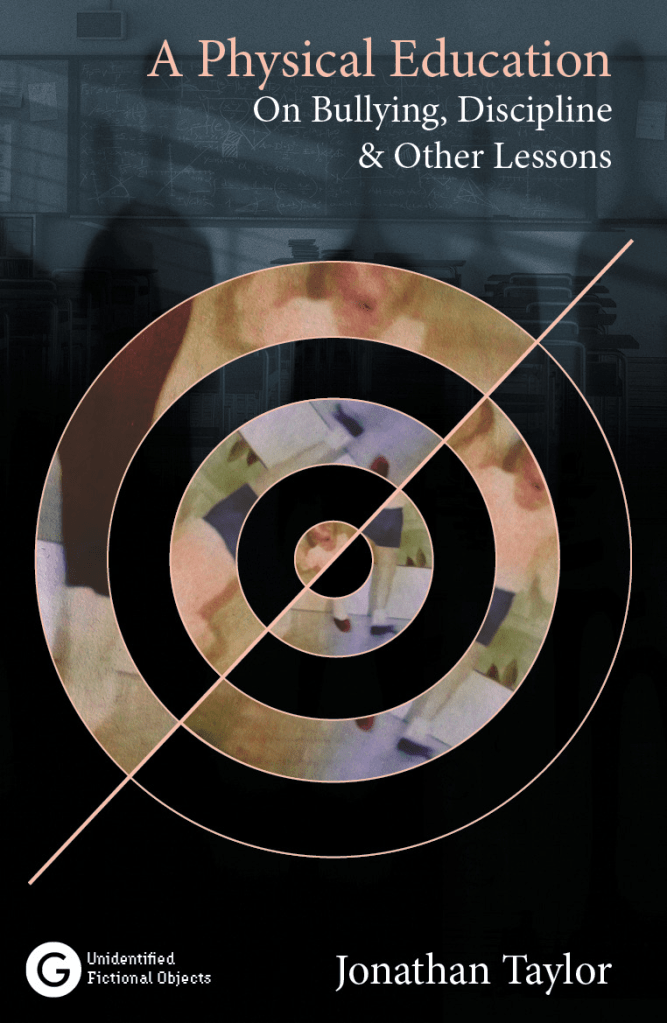
Jonathan Taylor, A Physical Education: On Bullying, Discipline and Other Lessons (Goldsmiths, 2024), reviewed by NTU Creative Writing PhD student Julie Gardner.

In the first chapter of A Physical Education, Jonathan Taylor –  an author, editor, lecturer and critic who lives in Leicestershire – writes: ‘I want to explore the hall of mirrors that is criticism and autobiography […]. I want to explore the uses and abuses of educational power from a subjective, rather than pseudo-objective, perspective.’ In a book that wears its evident scholarship lightly, Taylor reflects on his own experience in educational institutions, referencing literary criticism, philosophy and sociology – and achieves his aims with clarity and grace.

Having been a victim of workplace bullying myself, at a large primary school where I was deputy-head, perhaps I was looking for some kind of validation of my experiences as I read this book. I found it, but not until Chapter 7, ‘Politics’, when I recognised in Professor Caligula many of the behaviours that had broken my physical and mental health to such an extent that I finally resigned from a job that I had loved. As Taylor says, ‘most bullying is complex, nuanced, full of incongruities and ambiguities.’  As I read the earlier chapters of the book, I found myself thinking, sometimes uncomfortably, about my own behaviour as a teacher, and that of my colleagues. I remembered an incident in the mid 1970s when I had witnessed a boy being asked to remove his plimsoll so the headteacher could hit him with it, and the irony of the child’s ‘thank you sir’ as his shoe was returned to him. As Taylor notes, corporal punishment was banned in British state schools in 1986, when he would have been in his early teens: ‘I was there’, he writes, ‘at that watershed moment. I witnessed the change from a system based on caning to a system based on surveillance, one that attempted to act “on the heart, the thoughts, the will, the inclinations.”’

As is evident from its title, this book is not just about bullying, but also about discipline. Superficially, these are two separate concepts, one acceptable, the other not.  ‘Discipline is the legitimate exercise of authority, bullying is illegitimate, abusive, verboten’ – but, as Taylor points out, ‘the problem is that the line between them can easily seem hazy, even arbitrary.’ This haziness can result in a climate in which ‘disciplinary systems reflect, even enable the bullying they were meant to deal with’, and this, Taylor argues, is ‘institutionalised bullying.’

The book is obviously of particular interest and importance to anyone who works in schools or universities, but it does not confine itself solely to educational institutions and is accessible and engaging enough to appeal to a much wider audience. There are observations and memories about family (‘in general’, he writes, ‘the nuclear family is a little machine for bullying’), including a description of Taylor trying (and failing) to cope with the demands of two-year old twins while his wife was out for the afternoon. Ideas from Foucault, Freud, and Hegel are weaved in, alongside characters from Dickens, Kes and the Harry Potter books – all contained within what is essentially memoir. But A Physical Education is more than memoir: it is an invitation for the reader to think about the nature of power, to consider, in the words of Mary Beard, ‘what we mean by the voice of authority and how we’ve come to construct it.’ It challenges the status quo of our (still) overwhelmingly patriarchal and hierarchical society. ‘After all, to question someone’s authority in any hierarchical system is implicitly also to question the system itself, which is responsible for raising that person up according to its own criteria.’

Towards the end of the book is a brief account of a time when Taylor’s experience of being bullied by a particular boy was at its most intense: ‘After being whispered at a hundred times about my lack of British patriotism, defective testicles, and similarity thereof to Adolf Hitler, I lost my temper, stood up, and threw a chair at Lee. He threw one back, accusing me of bullying him.‘ Like most teachers, I can well imagine this scenario. Indeed, I have faced something similar on several occasions. To say it is challenging would be an understatement. Not only does the teacher have very quickly to establish his or her authority, because to fail to do so could lead to complete chaos, there is also (and arguably more importantly) the need to keep pupils and staff safe in a situation which could escalate quickly. The teacher in question in Taylor’s anecdote was a Mrs Dee, by implication someone ‘who refuses to be ventriloquised by the system bearing down on them; someone who understands that violence, discipline, and bullying are not entirely deterministic – that the bullying cycle can be broken.’

It is principally in these many moments of thoughtful unpacking that Taylor challenges ‘commonplace British wisdom’, arguing that ‘less discipline can mean less misbehaviour; less violence can equal less violence. Sometimes, not punishing, not disciplining, not bullying can actually be a sign of strength rather than weakness.’

This is an important book. I hope it is read widely by teachers, academics, and politicians, and by anyone who is still haunted by past bullying.


If you are a Creative Writing student at NTU and would like to contribute a book review to this website, please get in touch with Rory Waterman.

DO SOMETHING THAT SCARES YOU!

CLAIRE SUZANNE, a mature student on the BA Creative Writing at NTU, discusses fear and the joy and benefits of overcoming it.

Do something that scares you – a phrase I’d heard many times, but I’d never listened. I was the mute child, the socially awkward teenager, the adult who had nightmares about public speaking. I would shy away from the limelight, tucking myself into my homemade office, where I would create fictional worlds that allowed me to be the confident person I always longed to be. But that was before I came to NTU. At uni, I pushed the boundaries and left my comfort zone. At uni, I would no longer be a fictional character.

Bring on year two at NTU, wrap up some Bad Betty Poets, throw in a stage, sprinkle some students on top and what was I doing for my 41st birthday? Reading poetry to an audience, of course! The opportunity arose through WRAP – an extracurricular reading and writing group where I volunteer as an ambassador. WRAP was collaborating with Bad Betty, a poetry publisher that was offering one-to-one mentoring with published poets and performers. The opportunity was open to all NTU students, regardless of course or level of study, and I was surprised to find it wasn’t just Creative Writing students who wrote poetry in their spare time. I was the opposite: a Creative Writing student who did not write poetry in her spare time! This, then, was the perfect opportunity for me to find out if there was a poet hiding inside somewhere, waiting to be let loose.

My mentor, Molly, was amazing. Not only were we the same age, but we also had a similar sense of humour. Her poetry made me smile, especially her references to Dawson’s Creek, traffic jams, and finding the ability to be your genuine self, all of which were relatable. Yet when it came to picking themes for my own poems, my mind went blank. All I knew was that I didn’t want to depress the audience, I wanted to entertain. Then I realised I had to talk about my fear of aging – grey hair, wrinkles, and the dreaded menopause. After all, the reading was taking place on the day I officially became ‘over forty’.

Being on stage was no longer a new experience for me, I’d already read two pieces of prose at the Metronome. But those pieces had won competitions, they had been vetted, judged as ‘good writing’, which gave me the confidence to read them. But my poetry, that was new, it was unheard, it was… uncharted territory! I had nothing to compare it to, and I’d certainly never read my poems to an audience before.

My legs moved in slow motion as I approached the stage, but as far as I was concerned the walk to the microphone could last forever. Then I was there, facing my audience, their faces blurred by lights. My heart bashed against my ribs, and my clammy hands created wet imprints into the piece of paper I was holding. The room was silent, yet the slightest cough or mutter rang in my ears to let me know the audience was waiting.

Then I did something that scared me, and it paid off. To hear the audience laughing and applauding made it all worthwhile. Was the poem metaphorical? Not really. Did it rhyme? Yes. Could I write poetry for kids? Probably. But the most important thing was the experience. An experience inaccessible to me before I started at NTU, and one I will never forget, whatever future successes I might have.

Fiction became reality.

T.J. KLUNE: CAPTURING THE LITTLE LIFE

Second-year BA Creative Writing student Tilly Hollyhead discusses T.J. Klune and the unique nature of his writing.

Before I came to university, I didn’t have any particular favourite book. Whenever anyone asked, it was as though everything I had ever read had vanished from my mind.

I didn’t have a favourite author either. I never had the experience of searching for a specific name on the shelf or hunting for more of someone’s work, because that wasn’t something that mattered to me. It was the characters that I liked – they were the things that would make or break a novel for me. As long as the plot gave them enough room to breathe, I would never consider the author behind the words – which is perhaps an oversight, considering I’m trying to become one of them!

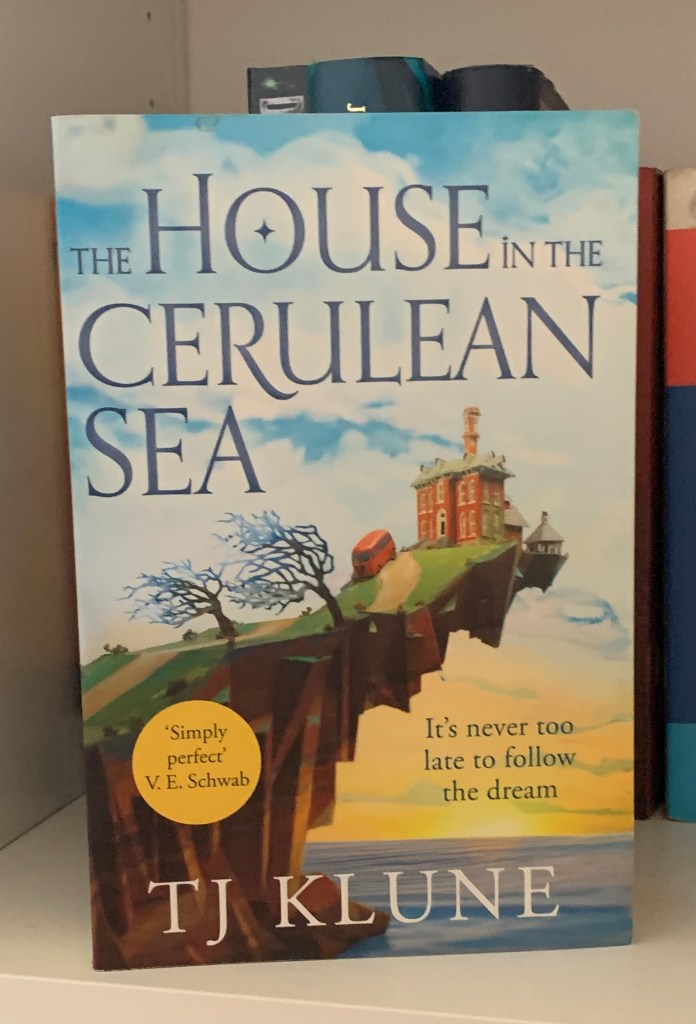
It was the characters who lead me to The House on The Cerulean Sea. Or, more accurately, it was my friend raving about it, but the point is that I ended up buying the book. A good choice.

T.J. Klune managed to fill a world with magic and wonder in a way that I had never expected. He created a world in which people could be made of slime, where gnomes didn’t get along with the rest of society, and where even the spawn of the anti-Christ could become someone endearing. It was a world with so much potential, and with characters that captured my heart in an instant. I tore through the book, expecting him to do something fantastical with the universe that he managed to build.

But he never did.

This man created a world that people could only dream of, and yet we only travel between two or three locations! We spend the opening in an office building and the rest of the time in someone’s house.

And yet this is part of what makes the story brilliant.

There’s no sprawling adventure that spans across three books and three sequels. There are only the characters we see in front of us, who have no intentions of going off to save the world and fight evil. They want to live their lives, no matter how odd those lives might seem to others.

They were like me, and yet so wonderfully different. For the life of me, I couldn’t understand them, despite relating to them on so many levels.

So I found myself doing the one thing that had never previously made much sense to me – searching for books with his name on them.

Whenever I saw one of his books on a shelf, the dent that it would put into my bank account seemed to be so richly compensated. The prospect of escaping into these worlds again, to only get a glimpse of the wider picture before settling down alongside our characters, was something of a dream.

Under The Whispering Door introduced me to the supernatural. Ghosts were no longer something to be feared, but a grandfather who enjoyed messing with the living and someone’s childhood dog. The Grim rReaper was not some ghastly figure in a hood, but a woman who had been given the job by chance. The door to the afterlife was not some grand structure, but the smallest opening in the smallest room in someone’s home.

We’re teased by grand ideas. We even see what we can only assume is the creator of the universe. We get to see him conversing with our characters, giving us cryptic messages about his grand plans, yet never providing answers.

Want to know what the meaning was behind all the hints he provided us with? I don’t.

Klune writes in such a way that we adopt the same attitude of our characters – we could not care less about why the universe was created or what is going to happen next. We just want to see the people we love safe.

It’s crazy to think about. In almost any other book, the author would take the opportunity to raise the stakes. There would be a final battle spanning across multiple chapters, perhaps. One of our beloved characters may even die, spurring on the others in their final moments to defeat the evil in charge of the universe and make everything right for the future souls that need guidance. This book ends with the creator of the universe still in charge, our characters finding peace with that through the knowledge that they can all stay together.

It sounds like the most unsatisfying ending in the world and the only thing I can say is try it before you judge.

So, what’s the take away from this? Am I just a rabid fan trying to get more people involved with my favourite story? Or is this a short review-essay that will be lost among thousands of others?

Well, it’s all those things. But it’s also a piece of advice to writers. Try to capture life.

Sometimes we get caught up in the overarching plots of our novels or the messages we’re trying to convey. It’s easy to forget that people are often meant to be at the heart of our stories. Their lives are what makes our stories unique. Their backstories, emotions and morals are the things that propel the plot forwards in a way that is meaningful.

Humanising characters serves to bring out the strongest parts of your story. Any emotional beats or deaths are heightened by the fact that these events are happening to people we perceive as real, people we care about.

There’s something amazing about capturing the little lives of our characters. Those little lives lead to big things.

MAYBE THIS IS SOMETHING I COULD ACTUALLY PURSUE

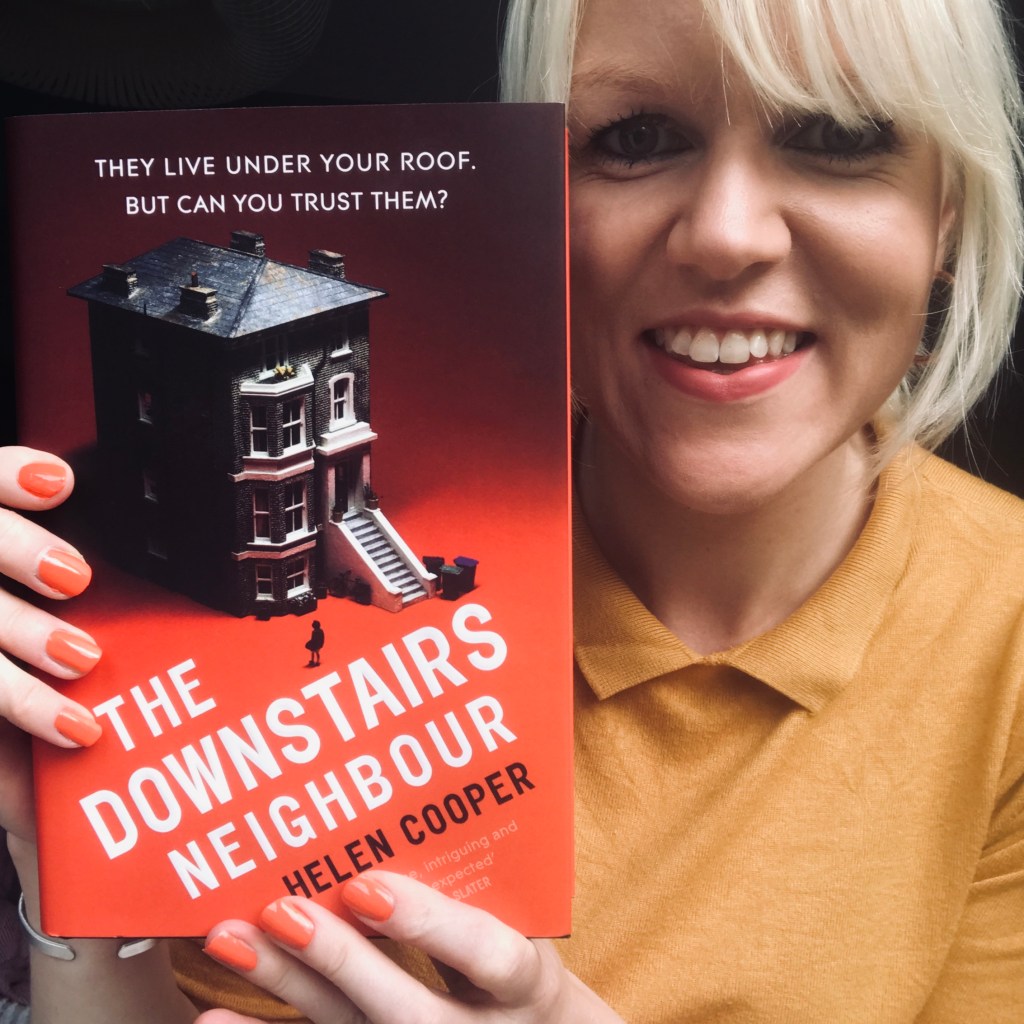
Helen Cooper is a graduate of our MA Creative Writing. Her third novel, The Couple in the Photo, was published by Hodder & Stoughton this year, and she is returning to the MA next term for a guest lecture. In this blog post, she discusses how the journey began.

People sometimes ask for my advice when they’re considering doing a MA in Creative Writing. They ask if I think it’s worth it, if it made a difference to my writing and career. I’m always cautious about advising people one way or another, because everyone’s different and there are so many factors to consider. But the truthful answer, from my point of view, is that doing the MA at NTU was one of the best decisions I made.

I started it in 2009, during a time in my life when I was deciding on my next steps. I had an English degree, was working in retail, and wrote stories in my spare time without showing them to anybody else. I wanted to do a postgrad, but the only thing that really got my heart pumping was the idea of doing an MA in Creative Writing. It felt a bit indulgent, but my family urged me to go for it, and I’m so glad they did.

There’s a long-running, sometimes controversial, debate about whether creative writing can be taught. And maybe there are some elements of it – and some elements of anything – that can’t; maybe you need a natural flair for language and storytelling. But if you have that, I strongly believe you can get much better by studying, practising, reading, reflecting, seeking feedback, and learning from more experienced writers. And for me, that process began with the MA.

During one of my first fiction seminars, as my peers and tutor Graham Joyce discussed a story I’d written, I remember having several epiphany moments. One was the realisation that showing people my writing was not as terrifying as I’d feared – in fact, hearing them talk about it as if it was worth their time was kind of lovely. And I realised you HAVE to show people your writing if you want it to work. You need insights into how your words come across, how you’re making people feel, the parts that are confusing or distracting or boring, even the parts that split the room. Those workshops taught me my first essential lesson as a writer: seek out feedback, reflect on it, then edit, edit, edit.

Learning to critique other people’s work was just as helpful. They say one of the major things a writer can do to improve is read widely. I’d always done that, but the MA showed me how to read like a writer, how to look for the craft behind the storytelling. Combine that with one-to-one meetings with a dissertation supervisor, guest lectures from industry experts, and all the extra discussions that happen before and after formal teaching, and I really did feel enriched, encouraged, and inspired. It was the first time I thought, ‘Maybe this is something I could actually pursue.’

And I did pursue it. Relentlessly! The MA was the start of my learning but it certainly wasn’t the end. Afterwards, I did some further short courses with Writing East Midlands and other local organisations; I continued in a writing group with friends I’d met on the MA; I devoured every book, magazine or blog post on writing I could find. Most significantly, I kept writing. I finished the novel I’d written for my dissertation – my first completed book – and began submitting it to agents.

That wasn’t, however, the fairytale ending! That novel got rejected more times than I care to remember. But I had some near-misses, and encouraging responses from agents about my writing. In fact, through this process, some of the things I’d been taught on the MA began to make even more sense. Know what you’re writing. Know your genre, your audience, your hook. I’d been told the importance of these things. But as I experienced the toughness of the industry first-hand, somehow it spurred me on rather than made me give up.

The third novel I wrote was the one that finally saw some success. I was teaching Academic Writing at Birmingham University by this point, and I will never forget receiving THAT email while I was halfway through giving a lecture. An agent called Hellie Ogden loved my book and wanted to take me on.

You’d be forgiven for thinking this was the fairytale ending. However, like all good stories, it wasn’t so simple. That novel went out on submission to various big publishers in 2014. Its first few rejections weren’t too troubling; they contained lots of praise, and phrases like, ‘I’m certain it’ll be snapped up elsewhere.’ Unfortunately, by the end, everyone had said the same! I was devastated, but my agent remained positive and determined, and I clung to two realisations. Firstly, several publishers had said they’d be keen to see future work; and secondly, they’d provided thoughtful feedback, which I could use. I set about a painstaking analysis of all their rejection notes. Afterwards, I knew what I needed to do next time: strengthen my ‘hook’ even further, increase the pace, and sit more firmly in the genre of psychological suspense.

The next book I wrote started from a simple scene I couldn’t get out of my head, and grew into a multi-perspective story about secretive neighbours embroiled in the disappearance of a teenager. In writing it, I drew on everything I’d learned up to this point, every piece of feedback or writing advice I’d ever had, and went all-out to try and nail it.

In September 2018, on my agent’s last day in the office before she went on maternity leave, we sold The Downstairs Neighbour to Hodder and Stoughton in a two-book deal. A few weeks later, we also sold the American rights. I now have three books published – the most recent being The Couple In The Photo, this year – and a fourth in progress. And I honestly don’t think it would’ve happened if I hadn’t written all those other books before it, starting with the one I submitted for my Creative Writing MA.

Creative writing courses aren’t magic bullets. But for me, the MA was just what I needed at the time: a chance to meet other writers, get feedback on my work, learn about the industry, learn about craft. To this day, when I’m drafting my novels, I still remind myself of a piece of advice I got from my dissertation tutor, David Belbin: “with ever chapter you write, think: what is the reader waiting to find out?” I’ve added other nuggets to that along the way – raise the stakes, my agent always says; give your characters clear goals, is one I got from my current writing group, Leicester Writers’ Club – and I’ll keep collecting them for as long as I keep writing. Striving to be a better storyteller does go beyond the length and scope of a creative writing course: it involves scribbling in notebooks, thinking in the bath, reading, being read, persevering, taking risks. But I’m not sure I would have got to this stage if I hadn’t taken that first leap.


Buy Helen’s most recent novel, The Couple in the Photo, here.