INSPIRED BY PAIN

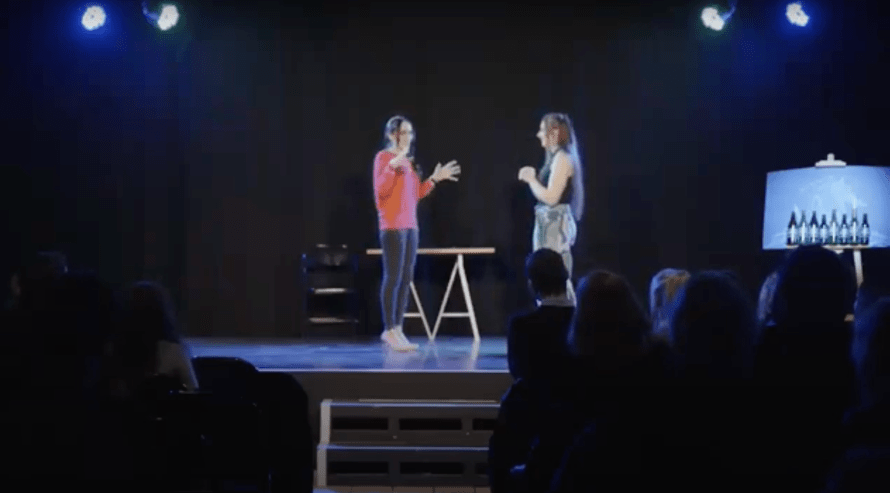
Second-year BA Creative Writing student Laura De Vivo recently watched her monologue, ‘The Demon in My Head’, being performed on stage. In this blog post, she writes about what inspired her, and the experience of seeing the work brought to production. You can watch it below.

When inspiration hits, its like a bolt of electricity through the body. Writing can be cathartic, and that was certainly the case here. I suffer from the rare condition called trigeminal neuralgia. The need to be strong, to fight it, to be the one that stays on top is a daily battle and not one I always win. Not only that, but I go head-to-head with an invisible demon. How can I fight it? With what I have at my disposal: words.

The opportunity to fight came, surprisingly, in the form of a writing prompt from a wonderful theatre company directed by Alice Connolly. Set up during lockdown, Message in a Bottle Monologues provides opportunities for writers and actors to collaborate. Initially, this was over Zoom, but word spread fast as the world has opened back up.

Alice, herself a writer and actress, provides the prompt; the writers provide the material; the actors provide the performance. In November 2023, the prompt was ‘Darkness and Light’, and instantly I knew what I would write. I was going to give trigeminal neuralgia a form and put it in its place while raising a little awareness.

Writing about something so personal and so raw was easy. As Hemingway said, ‘just sit at your typewriter and bleed’. I played on the qualities of each symptom and my reactions to them; I took all my anger from deep in my belly and exploded it onto a page. With the piece written, I nervously sent it off to Alice, not knowing whether it was what she was looking for. She loved it, and my five minutes of anger was accepted.

The premise of the show is clever: the writers and actors all remain anonymous; the actor is revealed at the beginning of each performance, and the writer at the end. On the night, you are invited to attend as an audience member. While mingling with drinks, there is an expectation that you will not discuss anything that might undermine the mystery. The theatre is littered with writers, actors and spectators, only Alice knowing who is who, and how they have been paired.

I sat through each performance on the edge of my seat, afraid to breathe, not knowing when my piece would be announced, trying to concentrate on the other pieces, and – more than anything – worrying about myself being revealed. I even had a painful wait through the interval. Finally, second to last, the title of my piece was announced. This was it – my talent, or lack of it, was about to be laid bare. I held my breath, eyes unblinking, as James Doolan (‘my’ actor) took to the stage. I was transfixed. Would he play it how I hoped? Would he give it the anger I had when writing it? Would it live up to my expectations?

I was in awe. Every raw emotion was delivered with all the venom I had intended. Yet I couldn’t believe those words were mine, that they had taken a journey from my head through my fingers then out of his mouth, almost seamlessly.

As a writer I hide behind my laptop, never needing or wanting to be seen, yet my moment in the spotlight was coming. All the writers were interviewed, to shed some light on their pieces. Standing on that stage was daunting, but after James’s wonderful performance I was proud to claim every word. When the show was over, I was suddenly swamped with people congratulating me on a job well done, asking to stay in touch, asking what was next. It was overwhelming, an insight into things that could be mine with hard work and determination, and I left the theatre that evening feeling like I had won an Olivier Award. It was an inspiring experience that had me burning for more. And I had put trigeminal neuralgia in its place. For a little while, anyway.
GET UP, GO OUT!

Leah Jackson, a first-year BA Creative Writing student, went to Paris and Florence, and came back full of ideas.

Many writers tend to struggle with ‘writer’s block’ – it is even the subject of a recent post on this blog. This term may be used when a writer feels lost and insecure in their ideas and projects because of a lack of motivation and inspiration. However, I believe this need never be permanent, as I have discovered a way to combat it: go and see something new, if you can!

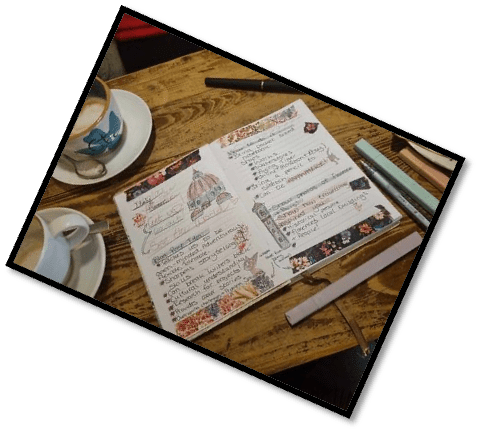
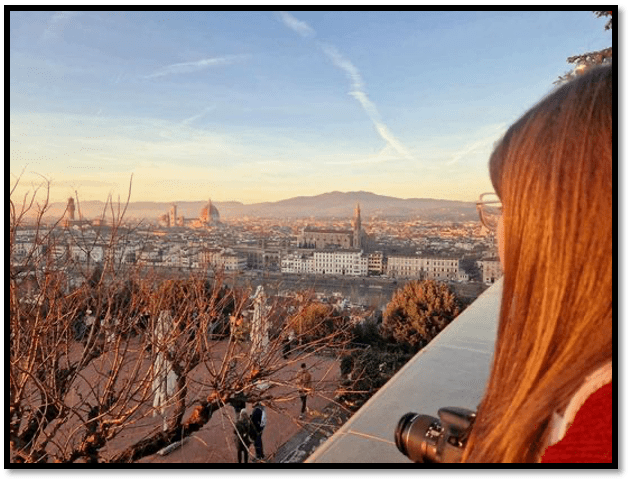
Throughout 2023, I was very grateful to find myself experiencing lots of opportunities to travel. I visited Paris with my college friends in February, and saved up my money to visit Florence for a week in December with a close family member. Every time I was traveling to a new area, I noticed my inspiration was like a bouncy ball of energy in my head, whizzing around full of creative ideas. I had never received that kind of inspiration when staying in my safe university hall bedroom). Breaking out of my comfort zone filled me with refreshing and exciting ideas I would never otherwise have added to my writing journal. Not only that, but it was also helpful to my research for my writing.

When I travelled to Paris, I was captivated by the beautiful city and the fashionable people I walked past. The architecture was extravagant compared to what I was used to. I found myself writing a lot of thoughts down in my journal during my time there. The building in this photo got me thinking creatively: I wondered whether this was an apartment building, and if so, who might live there? Is that person good? What is their occupation? Do they ever leave the building?

I hadn’t travelled outside of the UK since the age of eight, and I remember being scared at first to leave the country without my family. However, I soon found that it transformed my mind to become more flexible, adventurous and open to understanding other ways of living, and I wasn’t scared anymore, just eager to explore. Writing in an unfamiliar but gorgeous city helped me to sharpen my storytelling skills and experiment with unique characters based on strangers I met or observed. Looking back, these characters were the most authentic and unique I had ever written. Writing had become exciting again.

I had been most comfortable writing scripts in the genre of dark comedy. However, when traveling to Florence, I found my new love for writing romance when seeing the historical sculptures and magnificent Florentine buildings. I had never found these types of romantic ideas before anywhere else.  The famous historical geniuses that had built and lived in the breathtaking city also left me questioning what life may have been like here during the Renaissance.

My mind was full of curiosities. Did Leonardo Da Vinci used to sit where I am sitting and think about his next painting? What was Michelangelo thinking when sculpting his famous David? Was it painful work? What was it like to be a member of the Medici family – or one of their servants? Thinking about this made me realize history can also provide a lot of inspiration. Traveling to Florence helped me to gain inspiration for characters and experiment with a new genre I had never tried writing in before.

If you ever find yourself lost for ideas, then, I strongly recommend pushing yourself to break your comfort zone, to widen your mind to what the outside world has to offer. This doesn’t have to involve traveling abroad – it could be going for a walk to your local cafe or nearby forest, traveling to a part of your country you’ve never visited before, or going out of your way to meet new people you would never find in your usual friendship group. By doing this you are improving your writing skills with new knowledge. If you are in Nottingham, you have wonderful places to explore all around you. Getting yourself out there, whether it is your back garden or another country, can always help refresh those creative thoughts and stave off the dreaded ‘writer’s block’.

Here are some tips that can help you keep these new special ideas safe:

  • Always carry a pocket or bag-friendly notebook with you, I usually carry around an A5 journal and this can fit in my small satchel bag! This makes it easier to travel with.
  • Always bring a pencil or a pen. If you would like to make it more fun, some colourful highlighters or different coloured gel pens, stickers and washing tapes can be used to spice up your pages in your writing journal. (This can also make the ideas more memorable for you!)
  • A small laptop or iPad can also be used if you prefer to type up your ideas instead of writing them traditionally. I prefer the latter, but we’re all different.
  • If you do ever find yourself having a boost of inspiration and you happen to have forgotten your notebook and stationery, you can obviously also use your phone’s ‘Notes’ app, and jot them down in your journal later.
  • Buy yourself a professional camera or use your phone camera to capture whatever inspires you! Then you can always come back to that photo and brainstorm even more ideas. The photos in this blog post have mostly been taken on my recent travels. Using photography to boost inspiration can also be effective.

MAYBE THIS IS SOMETHING I COULD ACTUALLY PURSUE

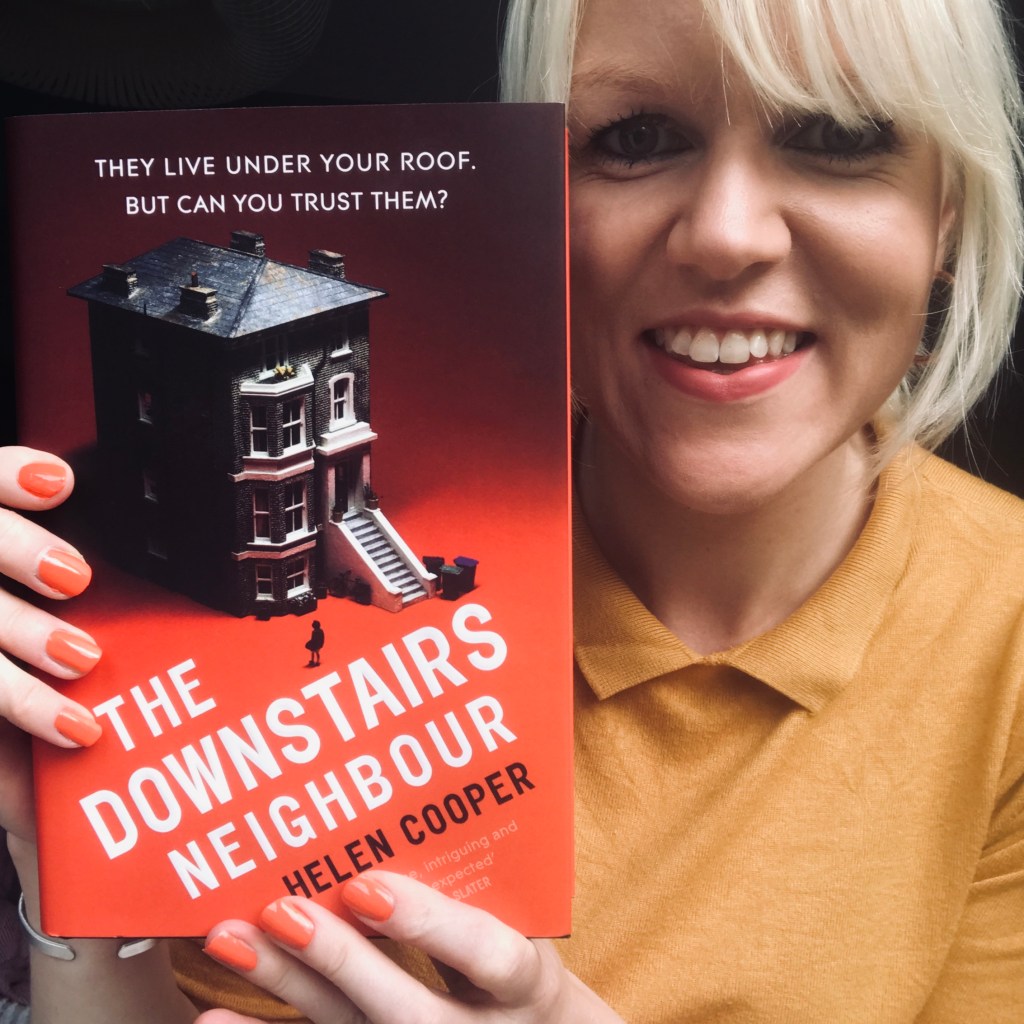
Helen Cooper is a graduate of our MA Creative Writing. Her third novel, The Couple in the Photo, was published by Hodder & Stoughton this year, and she is returning to the MA next term for a guest lecture. In this blog post, she discusses how the journey began.

People sometimes ask for my advice when they’re considering doing a MA in Creative Writing. They ask if I think it’s worth it, if it made a difference to my writing and career. I’m always cautious about advising people one way or another, because everyone’s different and there are so many factors to consider. But the truthful answer, from my point of view, is that doing the MA at NTU was one of the best decisions I made.

I started it in 2009, during a time in my life when I was deciding on my next steps. I had an English degree, was working in retail, and wrote stories in my spare time without showing them to anybody else. I wanted to do a postgrad, but the only thing that really got my heart pumping was the idea of doing an MA in Creative Writing. It felt a bit indulgent, but my family urged me to go for it, and I’m so glad they did.

There’s a long-running, sometimes controversial, debate about whether creative writing can be taught. And maybe there are some elements of it – and some elements of anything – that can’t; maybe you need a natural flair for language and storytelling. But if you have that, I strongly believe you can get much better by studying, practising, reading, reflecting, seeking feedback, and learning from more experienced writers. And for me, that process began with the MA.

During one of my first fiction seminars, as my peers and tutor Graham Joyce discussed a story I’d written, I remember having several epiphany moments. One was the realisation that showing people my writing was not as terrifying as I’d feared – in fact, hearing them talk about it as if it was worth their time was kind of lovely. And I realised you HAVE to show people your writing if you want it to work. You need insights into how your words come across, how you’re making people feel, the parts that are confusing or distracting or boring, even the parts that split the room. Those workshops taught me my first essential lesson as a writer: seek out feedback, reflect on it, then edit, edit, edit.

Learning to critique other people’s work was just as helpful. They say one of the major things a writer can do to improve is read widely. I’d always done that, but the MA showed me how to read like a writer, how to look for the craft behind the storytelling. Combine that with one-to-one meetings with a dissertation supervisor, guest lectures from industry experts, and all the extra discussions that happen before and after formal teaching, and I really did feel enriched, encouraged, and inspired. It was the first time I thought, ‘Maybe this is something I could actually pursue.’

And I did pursue it. Relentlessly! The MA was the start of my learning but it certainly wasn’t the end. Afterwards, I did some further short courses with Writing East Midlands and other local organisations; I continued in a writing group with friends I’d met on the MA; I devoured every book, magazine or blog post on writing I could find. Most significantly, I kept writing. I finished the novel I’d written for my dissertation – my first completed book – and began submitting it to agents.

That wasn’t, however, the fairytale ending! That novel got rejected more times than I care to remember. But I had some near-misses, and encouraging responses from agents about my writing. In fact, through this process, some of the things I’d been taught on the MA began to make even more sense. Know what you’re writing. Know your genre, your audience, your hook. I’d been told the importance of these things. But as I experienced the toughness of the industry first-hand, somehow it spurred me on rather than made me give up.

The third novel I wrote was the one that finally saw some success. I was teaching Academic Writing at Birmingham University by this point, and I will never forget receiving THAT email while I was halfway through giving a lecture. An agent called Hellie Ogden loved my book and wanted to take me on.

You’d be forgiven for thinking this was the fairytale ending. However, like all good stories, it wasn’t so simple. That novel went out on submission to various big publishers in 2014. Its first few rejections weren’t too troubling; they contained lots of praise, and phrases like, ‘I’m certain it’ll be snapped up elsewhere.’ Unfortunately, by the end, everyone had said the same! I was devastated, but my agent remained positive and determined, and I clung to two realisations. Firstly, several publishers had said they’d be keen to see future work; and secondly, they’d provided thoughtful feedback, which I could use. I set about a painstaking analysis of all their rejection notes. Afterwards, I knew what I needed to do next time: strengthen my ‘hook’ even further, increase the pace, and sit more firmly in the genre of psychological suspense.

The next book I wrote started from a simple scene I couldn’t get out of my head, and grew into a multi-perspective story about secretive neighbours embroiled in the disappearance of a teenager. In writing it, I drew on everything I’d learned up to this point, every piece of feedback or writing advice I’d ever had, and went all-out to try and nail it.

In September 2018, on my agent’s last day in the office before she went on maternity leave, we sold The Downstairs Neighbour to Hodder and Stoughton in a two-book deal. A few weeks later, we also sold the American rights. I now have three books published – the most recent being The Couple In The Photo, this year – and a fourth in progress. And I honestly don’t think it would’ve happened if I hadn’t written all those other books before it, starting with the one I submitted for my Creative Writing MA.

Creative writing courses aren’t magic bullets. But for me, the MA was just what I needed at the time: a chance to meet other writers, get feedback on my work, learn about the industry, learn about craft. To this day, when I’m drafting my novels, I still remind myself of a piece of advice I got from my dissertation tutor, David Belbin: “with ever chapter you write, think: what is the reader waiting to find out?” I’ve added other nuggets to that along the way – raise the stakes, my agent always says; give your characters clear goals, is one I got from my current writing group, Leicester Writers’ Club – and I’ll keep collecting them for as long as I keep writing. Striving to be a better storyteller does go beyond the length and scope of a creative writing course: it involves scribbling in notebooks, thinking in the bath, reading, being read, persevering, taking risks. But I’m not sure I would have got to this stage if I hadn’t taken that first leap.


Buy Helen’s most recent novel, The Couple in the Photo, here.

CREATIVE WRITING: NOT JUST A DEGREE

Second-year NTU BA Creative Writing student Claire Hickenbotham tells us about her experiences on the course.

The look I got when I told people I was going to university! It was a look of awe, in most cases, actually: people were impressed that I, a 39-year-old parent, was resuming education twenty years after I had left it. Body language gave away what false smiles hid. I was making all this effort to study in higher education, to give up my job, my routines, my financial stability.

Reality hit when I found myself in a classroom with people twenty years my junior. Even the lecturer appeared younger than me! I retrieved my trusty pen and paper only to find most other people now use laptops, tablets, even phones. I wondered if I could cope in this new world of online learning rooms, Teams meetings, e-books. It was all so new to me. I had two choices: to embrace it and pursue my love of writing; or to run for the hills, drop out of uni for the second time, and forgo any chance to start again – student finance wouldn’t cover a third attempt.

But, as I settled into my new life as a student, doors started opening, doors that had previously been locked, or hidden. I realised how trapped I’d been, stuck in an admin job where I spent more time watching the slow ticking clock than enjoying the mind-numbing tasks issued by my boss. All the while I had a completed novel, short stories and blog entries clogging up my PC – all unread by the public, all wasting away on a hard drive. I didn’t know what to do with them. How does an unpublished writer become published? Where do you go? Who do you speak to?

The answers became clear at uni. Not only have the workshops and seminars helped me dramatically to improve my writing, but I have been made aware of competitions, magazines submissions, volunteering opportunities, writing groups. I joined WRAP, an NTU reading and writing group, where I met fellow students with a love of literature. They gave me the courage to enter my first competition. I cried when I found out I was a winner. My piece was published, and I had the privilege of reading it on stage. I walked out trembling, terrified I’d mess it up: I was way out of my comfort zone. But the applause made it all worthwhile. My work was finally out in the world.

Since starting my degree, I’ve made lifelong friends, my confidence has soared, and my writing is better than it’s ever been. I’ve been published twice, I work as a mature student ambassador, and I volunteer at WRAP. Being part-time allows me the opportunity to get involved in activities I may not have had time for otherwise. I live twenty miles away and juggle my commute with the school run, my studies with parenting. It’s not always easy. Finding time to write can be a challenge. But I am determined to get the most out of my time at university.

Creative Writing isn’t just a degree, it’s a a leap forward, and the achievement of a lifelong dream.


MOTIVATIONS

Second-year BA Creative Writing student Tilly Hollyhead speaks about her past struggles with motivation and the techniques that she has learned to use to deal with them.

I love writing. Ever since I discovered that I am semi-decent at it, I have loved being able to create different stories and to express my opinions. It’s a therapy, an outlet, an escape from the outside world.

But making the time for it often seems impossible.

It’s not like I have that much going on. I’m doing a Creative Writing degree and yes, it teaches me a lot, but perhaps most of all it encourages me to better my writing. Most of my lectures are ultimately about how I can better myself, prepare myself, how to then get my writing out there, one way or another, and let everyone know that I’m here. Yet writing still seems impossible.

There have been times when I have been lying in bed, knowing that I have to get something done. I know that there are so many things I could put on the page, yet I can’t find the strength to pick up my laptop.

So, what have I learned to do about it? I wouldn’t be writing about this if I hadn’t found some way to get through.

There’s no nice way of putting it – I have learned to force myself to do it.

I still procrastinate for a few hours here and there – brushing my hair, or scrolling through TikTok. Then, I tell myself that it’s time to get to business and I will not be leaving my desk until it is done. No matter how much I want to turn off that screen and binge-watch the latest Marvel series, I decide I will not take myself away from the task at hand.

It’s not a sure-fire solution, not by any stretch of the imagination. The words that I pump out during those times are never my best, but I know I have something rather than nothing to work with, and I still feel a sense of pride. I’m able to tell myself that I hit a wall but I managed to find a way over it, and it’s one of the most rewarding things I can think of.

Struggle is one of the defining traits of being an author. Ask anyone who is one! But easing that strain by sharing our ideas, collaborating, being a cohort, is what brings writers together. So, I’ll share a few more things that I’ve begun using.

First off, if I need to meet a deadline, setting myself a mandatory word count for the day – the Graham Greene or Sarah Walters method, apparently! –  never works as well as setting a timer. This a trick taught to me by one of my fellow writers.

I think we’ve all had moments when we tell ourselves that we’re going to get started on a project, only to then tell ourselves that the deadline is far away, that it can wait. By setting a timer, you’re giving yourself an immediate deadline. We all know that nothing will happen if we don’t write to the best of our ability when the timer ends, but there’s something about it that motivates us to do our best.

Another thing I find useful is writing in groups, or with company. We have lots of opportunities for this on the course, but I also get that in my university accommodation.

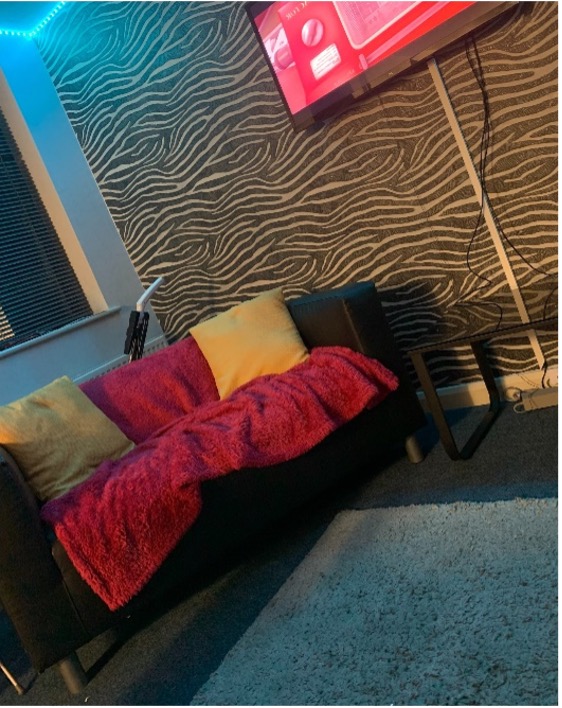
When I’m trying to get my work done and I find myself slipping, I move into the living room. Sometimes my flatmates will be in there, working with me, and at others they’ll be passing through, but they’re helpful just by being there.

It’s like a positive form of peer pressure. If other people are in the room, I find myself wanting to work. Their prescience makes me more focused, especially if they’re doing something alongside me. Once I’m relaxing in the evening and looking back on the things I’ve produced, I find myself happier with what I’ve managed to accomplish.

And, for my final and perhaps most obvious piece of advice, I’d encourage everyone to get involved with writing prompts. It’s that simple!

A lot of my better ideas have come from writing prompts and thinking bout how to take them, and myself,  in new directions.

One of my recent favourites is a prompt in which the protagonist wakes in a hibernation pod to find that humanity has reverted to medieval times after almost being wiped out by an unknown force, and their inventions have been mistaken for magical artefacts.

Prompts, good ones, provide the perfect balance of instruction and freedom. They help you work on something new, or a new way or doing something, without it feeling like a chore.

Forcing yourself to write is great when you have the creativity but struggle to get it out. When it’s the other way around, sometimes all you need is a little push in the right direction. A fun little challenge is like a little kick to the back of the legs, I think. It’ll make you jump and get you moving again.

A wonderful thing about writing is that no one can write what you do. Nobody is you, and your writing can grow to reflect that. Whether an idea is entirely yours in conception, or came from a prompt, the way you look at whatever it conjures is unique. That is something to be treasured, no matter how long it takes for you to get the words down.

FEAR NOT

Julia Hodson graduated from the MA Creative Writing at NTU in 2020. In this blog post, she discusses the lasting friendships she made on the course.

Apprehensive, anxious and terrified: three words that describe how a postgraduate Creative Writing student feels before workshopping a precious piece of writing for the first time, I think. Yet as you walk away from the graduation ceremony with your MA certificate furled in your hand and return to a world without workshops, I’m going to suggest that constructive critical feedback on your writing will be the thing that you miss the most.

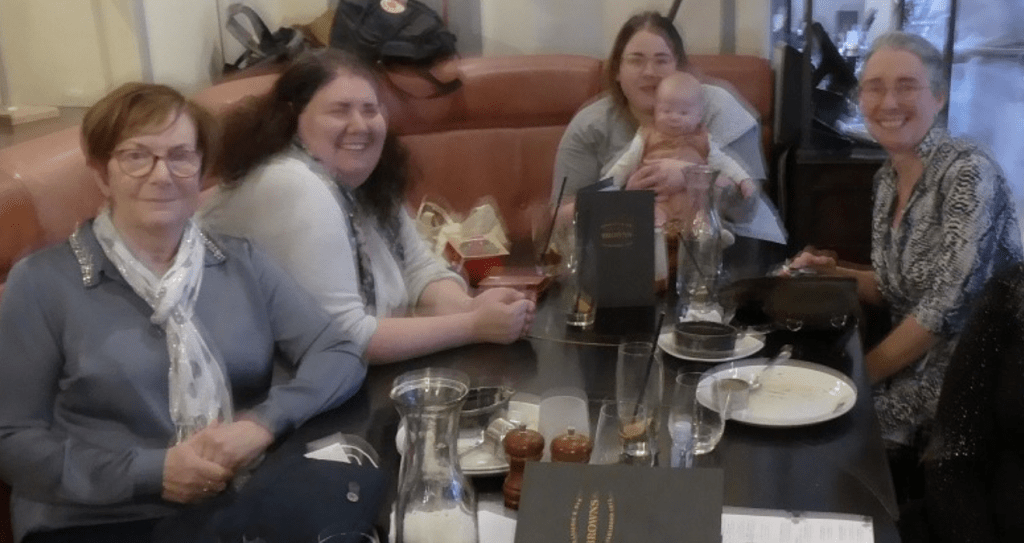
As a member of the 2018/19 MA Creative Writing cohort, I was so lucky to connect with fellow writers from who wanted to continue to critique each other’s work after graduation. Covid restrictions on physical contact were easily surmounted and a group of us continued writing and critiquing via Zoom.

We had been that group that sat on the front table next to the lectern for the core module’s lectures. Admittedly my collective noun for us was the ‘misfits’, for we were a gloriously diverse group of students. I needed to be near the front so that I could hear and see everything; others had their own reasons, but I am glad we all sat together.

And to the outsider we continue to look like an interesting bunch when we sit in cafes clutching pieces of writing and waiting for feedback after coffee. The respect that we feel for each other makes sharing writing and participating in feedback not just a privilege but a joyous experience. If one of us is ‘stuck’ in our writing, we engage in ideas generation and generally – in fact, almost always – a solution or a better fix is found. We listen, we empathise, and we laugh. Appropriately, of course. The fear is gone, and the nerves have ceased to jangle whilst waiting for feedback; instead, there is a flutter of excitement about what opportunities for improvement will be stimulated.

We have supported each other through births and deaths, successes and failures, self-publishing and keeping on trying to publish, being unsuccessful in competitions, and having material performed in theatres. One of our dedicated cohort-from-a-cohort is about to submit a PhD thesis. Oh, and I have been collecting my state pension You’re never too old, nor too young, to write.

Together, we have travelled the road most frequently travelled by writers, that of self-doubt and procrastination. We challenge and support each other. We listen and encourage each other. We trust each other.

So, I have a message for anyone currently studying: go forth after your graduation and embrace that which you once feared. Seek out fellow students and become long-term friends that support one another – not just one another’s writing, but with all that life brings.

Words by Julia Hodson, with thanks to Tracy, Jennie, Sunita, Lauren and Riley.


Find Julia on insta @minersprog, and hear her on the podcast Specs Drugs and Sausage Rolls on Spotify.

Picture 1: Riley and Yashka
Picture 2: A Christmas lunch get together

AM I A WRITER?

Final-year BA Creative Writing student Eloisa Herron describes her journey towards taking the course, and her feelings about having done so.

I had never considered myself a writer, not in the slightest. I have long enjoyed reading, acting and drawing, but had never contemplated sitting down to write a story.

I enjoyed English just fine at school: I liked to study the various pieces of literature and I considered myself relatively good at the English Language side of things. But a very boring (and unsupportive) English teacher made for a total loss of passion for the subject, if not the broad subject matter. I underachieved in my English GCSE, which didn’t exactly make me jump at the idea of doing it at A-level.

I decided to study Business BTEC and Psychology, two things I had never done before. I had never really had much interest in business, but felt it was ‘safe’. That’s what I liked about it. It was a safe option that would, surely, open up lots of future prospects.

But I wanted more than that. I wanted to wake up every day inspired and passionate about what I was doing with my life.

When we went into lockdown, I had applied to study business marketing at various universities. I was accepted at Royal Holloway, which felt like a huge accomplishment. But still, it didn’t feel right. I wasn’t excited. My thoughts were consumed by doing this degree and the prospect of then spending my life behind a desk doing what I feared would be underwhelming work.

However, being at home all day every day for months opened up stacks of free time. So, I began reading again. I had read books before, of course I had, but this was different. I would pick up book after book, and venture into online stories: fan fiction, romances, thrillers. The turning point was when I picked up Call Me by Your Name by Andre Aciman. I remember the moment I finished it, closing the last page and thinking how changed I was. The way is made me feel and the impact it had on me. I thought ‘I want to do that; I want to make people feel how this book has made me feel.’ I wanted to learn how to write as beautifully as this author, and so many other authors.  

A week before A level results day, I was researching universities that offer creative writing courses. I was panicked by the prospects of trying my hand at this art. The idea that even if I tried, I would never be good enough, that it was so easy to fail. But this made it more exciting. It wasn’t ‘safe’ anymore. It was thrilling and made me feel like my life instantly had more purpose. I may never make it as an author but hell, I am going to try. And sure enough, on results day I phoned up Nottingham Trent and asked to be part of the course.

Three years down the line, I don’t regret a single thing. I am about to write a dissertation and finally throw myself into a bigger piece of work. I have achieved so much already and am so proud of how far I have come.

So, for anyone unsure: Do it! Take a risk if it means you get to enjoy what you do every single day. I have never felt more like myself, and I wish everyone could feel like that. Never be afraid to chase something you want.

I had never considered myself a writer, but now, I wouldn’t consider myself anything else.

REACHING FOR THE RISING SUN

Archie Peters, who completed our MA Creative Writing this year, has just started a new teaching job in Japan. In this blog post, he gives us some first impressions of his new home. He is in the process of developing his own travel blog, which you can follow here.

After fourteen hours of staring at the images of clouds below me from onboard camera, alternating with patches of uncomfortable sleep – the kind from which you wake less rested, with a twisted and cramped neck – I had arrived at my destination. Tokyo.

During my travels time had jumped twenty-two hours ahead: I had left in the afternoon and arrived in the evening of the next day. My head felt as if it could roll back off my shoulders at any moment. But Tokyo is the city that never sleeps, right? So I decided I wouldn’t either.

Me and a few other Assistant Language Teachers (ALTs) from my Japanese Exchange and Teaching (JET) programme, headed into what we thought was central Shinjuku to find an izakaya. A good friend from my time as an undergrad, Alfie, was on the way out, after a year in Japan, so he joined us for his last night and our first. We sat snug in a little booth, shielded from the rest of the izakaya by a curtain with prints reminiscent of Hokusai’s Great Wave, and I had my first taste of Basashi Sashimi. I was no longer at home, after all, and had decided to try any food that was put in front of me. The menu said this was horse, but the man who called us in off the street called it beef, so I thought it must’ve been a translation error. Alfie, well versed in the way of the izakaya, assured me it was horse and proceeded to order a plate. Now, if you told me that a certain supermarket chain had sold me ‘beef’ which was horse, I’d be horrified and would seriously debate whether to finish the Bolognese I had created with it. However, when this was in front of me, a tender red over a large green leaf I do not know the name of, I could not resist. It was delicious.

Another surprise came shortly after when we realised we had not in fact gone to central Shinjuku. We were, as it turned out, in a small neighbourhood fifteen minutes away. It should have been impossible to miss: Godzilla is there, surely, poking his head out over the neon-clad towers.

Other than basashi and incredibly tall towers, my few days in Tokyo, before my job started away to the south, was mostly spent fighting off exhaustion in full suit and thirty-degree heat as I listened to orientation session after orientation session to prepare me for life in this country. I was then back to Haneda to fly down to Ehime, a prefecture covering the northwest of the island of Shikoku. I slept, less fitfully this time, and woke to see a sparkling, still sea (the flat Seto Inland Sea), with island mountains in their thick green coats breaking up the blue. To compensate for all the views I had missed on my short flight, I then glued my forehead to the window of the car as I travelled through the Ishizuchi mountain range on my way to Saijo, my new home.

The mountains here never seem to end. Even when you look out onto the sea, they’re everywhere. They spread along the horizon, and the clouds scrape along them. Ishizuchi, the highest peak in Western Japan and the one behind my house, is a sacred mountain, one of seven in the country. I ventured to the Shinto shrine dedicated to the mountain, which was not hard to find thanks to the gigantic torii gate followed by an equally large stone one signalling the entrance. Beyond these is another gate, two shishi lions guarding it, and with two large tengu – long-nosed yōkai (supernatural entities) with wings, who used to inhabit the mountains – waiting behind a sheet of glass. There is a tree with a shimenawa, a type of rope carefully bound with shide (the lightning bolt shaped paper), dangling from it. These, I learned, trap spirits inside, or ward off evil, marking sacred spaces such as Shinto shrines. A bridge, roughly halfway up the shrine, had a communion of koi collecting just below it, as if they’d been trained to beg for food like puppies. At the top, after countless smaller shrines, I found myself in a large open space, another, bigger shrine, with a mighty view of the whole of Saijo, the Seto Inland Sea, and various islands between me and Honshu. I turned away from this view and looked up, realising that, after all those steps and slopes, I’d only made it perhaps five percent of the way up the mountain.

It is said that when, 1300 years ago, Kozumi Yaku climbed Ishizuchi, he prayed, purified his mind and body, then unsuccessfully tried to reach the summit. As he began to descend, he encountered an old white-haired man, intently sharpening his axe in Jojusha Shrine, and when he asked why, the old man answered, ‘I will sharpen this axe until it is a needle.’ These words motivated Kozumi, for some reason, so he decided to resume his journey to reach the top. It is said the old man was Ishizuchi Omikami (essentially the deity of the mountain), and that after meeting with him, Kozumi’s wish came true. This shrine is revered as a shrine for the fulfilment of wishes.

I do not know what I will wish for. Maybe climbing Mount Ishizuchi will be enough to motivate me to try even harder for my dreams. One thing is for certain, though. If the shrine, for whatever reason, does not grant me my wishes, I’ll return home with further inspiration for my writing. For me, that is enough.

BLANK

Second-year BA Creative Writing student Tilly Hollyhead discusses the challenge of facing up to the blank page.

All writers, I think, have a common enemy. It has plagued us ever since we could pick up a writing implement of some kind, and it will continue to plague us when we begin writing using the chips implanted into our brains, or whatever we might end up using to create stories in the future.

The blank page.

No one knows why a blank screen or piece of paper has so much hold over authors. It should be a thing out of our wildest dreams. It should be a space where we can draw out all of our innermost thoughts and share them with the world because we are not confined.

However, those thoughts seem to leave me the moment I sit down, and I know I am not alone. You grab your pen and your water bottle. You settle down in a comfy spot next to the window so you can gaze out of it whilst contemplating your ideas. You open your notebook or laptop, hands poised to write your masterpiece.

Then, the ideas don’t come. It’s just you and the little voice inside your head, asking you why it’s so hard to do what you’re good at.

That blinking cursor has haunted my dreams ever since I began taking writing seriously two years ago. Even while writing this blog post, I have stopped writing most of these sentences halfway through because I have no idea how to finish them, nor what will come next. The notion in my head cannot quite form the full idea on the page. Ideas slip away and I can’t grasp onto them, leaving them to fall into the back of my mind. Whenever I do remember them again, there will always be the risk that the cycle will repeat itself immediately, all because of my archenemy.  I can’t tell you how many times I’ve been ready to get in my intended daily word count, only to leave my desk with one hundred words and the worst case of imposter syndrome I’ve had since last time.

So, how are we meant to battle against this beast?

If this mystery has bothered the likes of Philip Larkin and Stephen King, how are we meant to do any better?

Well, we can’t.

When I began thinking about writing this article, I wracked my brain to find an answer to this problem. I was never under the illusion that I would solve it through writing a single blog post but I had thought the ideas would come to me.

The blank page is something that I – that we – will never defeat because, in many ways, the struggle that we have against it is what makes us writers.

The fact that we go against all odds to create our pieces is what makes us proud. It is what makes us sit back after writing a good paragraph and allow ourselves to be proud. It’s what makes it exciting to text our friends, telling them about the idea that we had and growing more excited as we continue bouncing ideas off each other. It’s the joy we feel when we realise we’ve gotten into a flow, somehow, all of a sudden. It’s the focus we get out of nowhere when the words begin falling onto the page in waves, unexpectedly and perhaps rarely.

None of this could have happened without that first struggle. It’s the first hurdle that we need to jump and it will not be the last.

There will be many more daunting foes than the blank page. The only reason it’s so scary is because it is our starting line. It’s represents a commitment to finishing a piece, to not having a blank page, no matter how frustrating it becomes or how long it takes.

It pushes us off a cliff and sends us down into the depths without warning, once the first word hits the page. We hate it for what it does but we can’t exist without it. Writing is discovery, and you can’t discover something you know already.

So, my only advice is to get ready for pain. Prepare for your back to ache like hell. Prepare for your eyes to strain. Because you will never kill the blank page. You will only learn how to become brave enough to face it.

Rediscovering Education

Laura De Vivo

(BA Creative Writing)

When I think about my mother at my age, her desires, her perception of herself and where she fit in the world, it is a far cry from the choices I am making for myself and where my place is as I begin my slide towards fifty.

My choices in the mid-nineties in no way mirror those of most of my present-day counterparts. At the tender age of twenty-two my sleepless nights were the result of a teething baby, not the submission date for an essay.

I by no means regret my youthful decisions: opting for the “I’ll still be young when they’re off my hands” angle. Now that my responsibilities are off making lives of their own, I am free to refocus my attention on myself, armed with the maturity twenty-five years has given me. Re-entering a world I had long since left behind was a brave step. Sitting on the opposite side of the desk at forty-two was no easy adjustment (I had spent my working life as a teaching assistant) and remorse from not having tried harder at school plagued me. Little did I realise that the first day back as a student would set me on the path of rediscovery.

Two years later I was clutching two GCSE certificates and looking for the next thing to get my teeth into, my head already turned by the prospect of an A level.  I found I had become addicted to learning. I was a sponge. I just couldn’t stop. Once the A level was in my arsenal, there came the next question: do I take a degree?

Friends and family asked, “why do you want to put yourself through that?”

 But it wasn’t an act of self-flagellation, it was a question of ability: I was staring myself dead in the eye and laying down the gauntlet. Beyond a certain age it is all too easy not to question your standing in life, yet in a modern age where reinvention of oneself is widely accepted, I was free to be anything I wanted to be.

On the day the acceptance from NTU dropped into my inbox, a new feeling took over, one I hadn’t seen coming. I had a resounding, gut wrenching feeling of imposter syndrome. I mostly kept it to myself, embarrassed to shout from the rooftops about something that had taken me five years to achieve, and I had a strong feeling of parental guilt: one of my children was still in the education system. Was I stealing her thunder? Should I have stayed in my ‘mum box’?

 However, with the full approval of my children, I attended the open day, feeling a whirlwind of emotions: I had the same trepidation some other students were displaying (or hiding), with one key difference: I looked like one of the parents. I walked across the Plaza on Clifton Campus, my heart pounding, faking confidence, and swallowing back my lunch. Had I bitten off more than I could chew this time?

Then, the first day arrived. A swarm of students filed into the Playhouse, me included, together with the only other mature student on my course. We listened to enthusiastic speakers, and I wondered what relevance this had for me. Could I have the things being offered to the younger students? But I’d come this far after all, so why not?

I am now at the end of my first term, and I have realised there is an advantage to attending university as a mature student. There is no shellshock from leaving home (we mostly study in our home city). There is no need to extrapolate ourselves from personal insecurity like some younger people must, or walk the unpredictable minefield of learning who we are for ourselves: that has long been established. We are not shackled by any of the potential burdens of youth. I feel liberated just to enjoy the experience of higher education. 

According to UCAS, 40% of mature students are over thirty, proving that we have a thirst for learning beyond the conventional expectations for education. We have a great deal to offer with the wisdom of our years and experience, before returning to the workforce in a stronger position.

Joining university as a mature student isn’t like gatecrashing a party. There is a plethora of societies to get involved in, more than happy to accept the more mature, and there is a thriving community for us too. Age has not felt like a barrier at all! I’d be lying if I said all the trepidation had melted away, and of course I share many of the same concerns as every student. But university has not manifested into the monster I’d feared, and the technophobe in me has no need to struggle in digital ignorance either. I have found the library to be a great resource, along with lecturers and students who are more than happy to assist. Alongside the degree, there is an opportunity to learn a language ­– I am taking advanced Italian – and other skills that will future proof me and, I hope, make me the best-educated version of myself I can be.

I will graduate the year I turn fifty, giving myself an exceptional gift that I had never considered could be mine.