JENNIFER RAJASEKAR, who is a full-time international student from India on our MA Creative Writing, tells us about one of her favourite places in England.
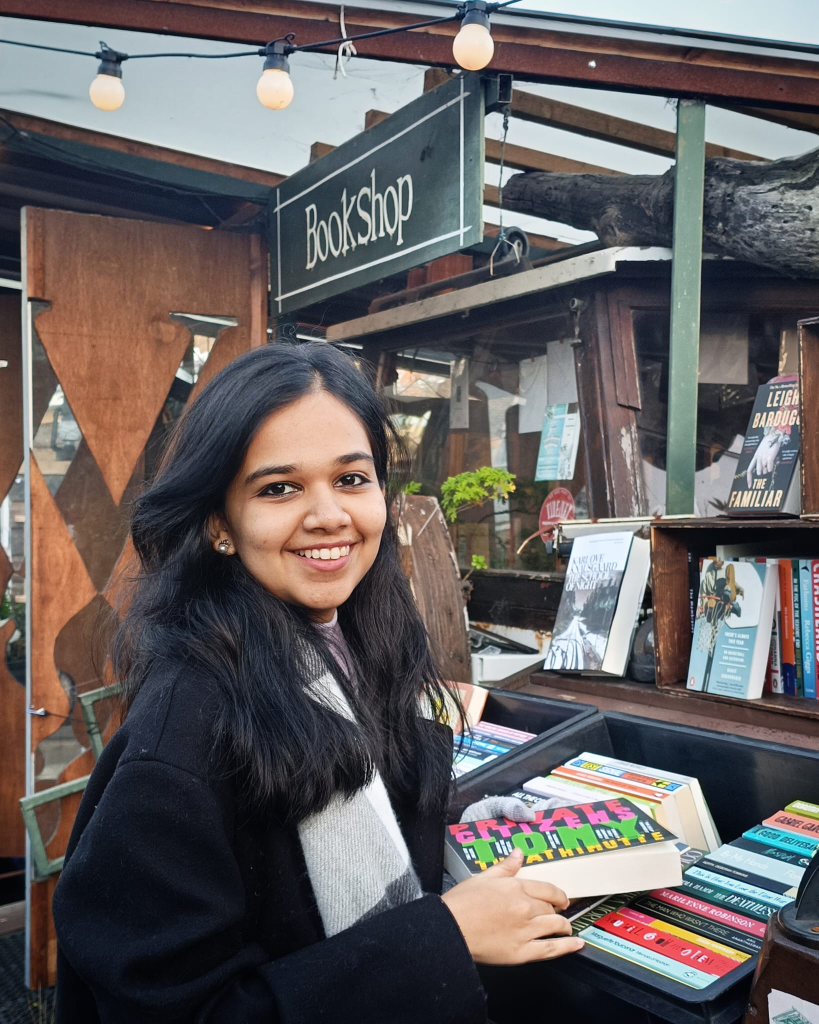
I have always believed that bookshops hold stories long before we even open a book. Yet nothing prepared me for the moment I discovered a bookshop that quite literally floats on water.
Word on the Water, often affectionately called ‘The London Bookbarge’ is one of the most unusual and beloved independent bookshops in the UK. Housed inside a historic canal boat, it is not simply a place to purchase books, but a living literary space where reading, music, and community really do seem to coexist. The moment I heard about it, I knew I wanted to experience it – not just as a visitor, but as a reader stepping into a story. As someone who studies literature and spends much of her time surrounded by texts and ideas, the thought of a bookshop on water felt almost poetic, like a metaphor made real.
The shop is permanently moored along the peaceful towpath of Regent’s Canal, a short walk from King’s Cross. Situated in the vibrant cultural area near Granary Square and Coal Drops Yard, the barge rests quietly on the water, offering a gentle contrast to the modern architecture and busy streets surrounding it. The address reads simply: Regent’s Canal Towpath, King’s Cross, London N1C 4LW. but it feels like a place removed from the city, a small literary sanctuary.
The vessel, known as Dianti, is a Dutch canal barge built in the 1920s, and had a busy working life long before it eventually found a second life as a travelling bookshop in 2011. Then, for several years, the bookshop had to move every two weeks due to canal regulations. Customers would return to visit, only to find the shop had gone somewhere else. Financial struggles and uncertainty became constant challenges.
In 2015, after public petitions and widespread community support, the shop was finally granted a permanent mooring in its present location. That transformed its future.
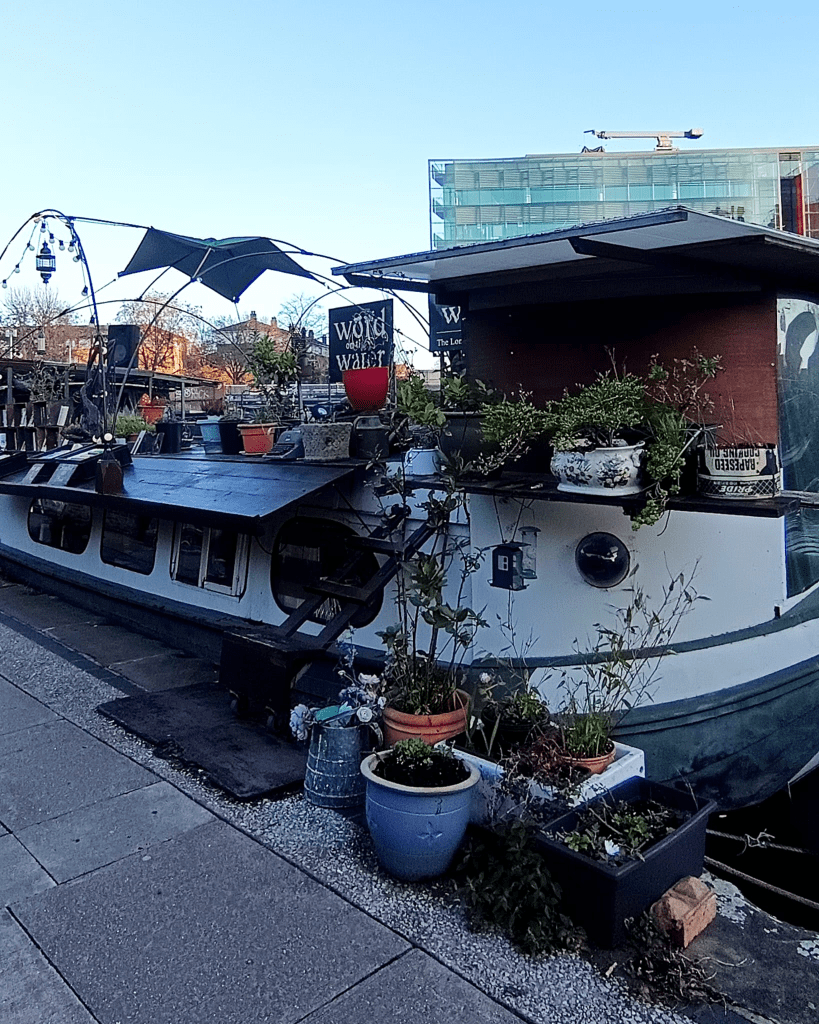
My first glimpse of the boat felt like spotting a scene from a storybook: the barge appeared both modest and enchanting. Its painted exterior carried the slightly weathered charm of something well-loved, the bold lettering of its name, Word on the Water, announcing its identity with quiet confidence. It did not look like a conventional shop. It looked like an invitation.
Before embarking, I lingered outside. Books were arranged along the exterior railings in neat, inviting rows, their colourful spines catching the light. It felt less like a commercial display and more like an open conversation between readers. Near the entrance, I noticed the booksellers themselves – warm, approachable people who seemed genuinely delighted to talk about literature.. Beside the boat, a small souvenir section displayed postcards and literary keepsakes.
And then there was the dog, resting near the entrance, quietly observing me as I stepped aboard. Around the boat, green leaves spilled gently from pots, and delicate fairy lights were strung along the railings. I had crossed a threshold into a different world. For a moment, I simply stood there, absorbing the atmosphere, the gentle rocking of the boat, the soft rustle of pages turning, the sense of being surrounded by stories.
From the entrance, a narrow set of steps led into the main interior of the barge. As I carefully made my way down, the space opened into a hall of bookshelves. These are made from reclaimed wood, I learned, and they giving the interior an old, rustic aesthetic.
Barges aren’t big, and books filled every possible surface, stacked vertically and horizontally. The collection was remarkably diverse: classics, contemporary fiction, poetry, children’s books, non-fiction on art, politics, and culture.
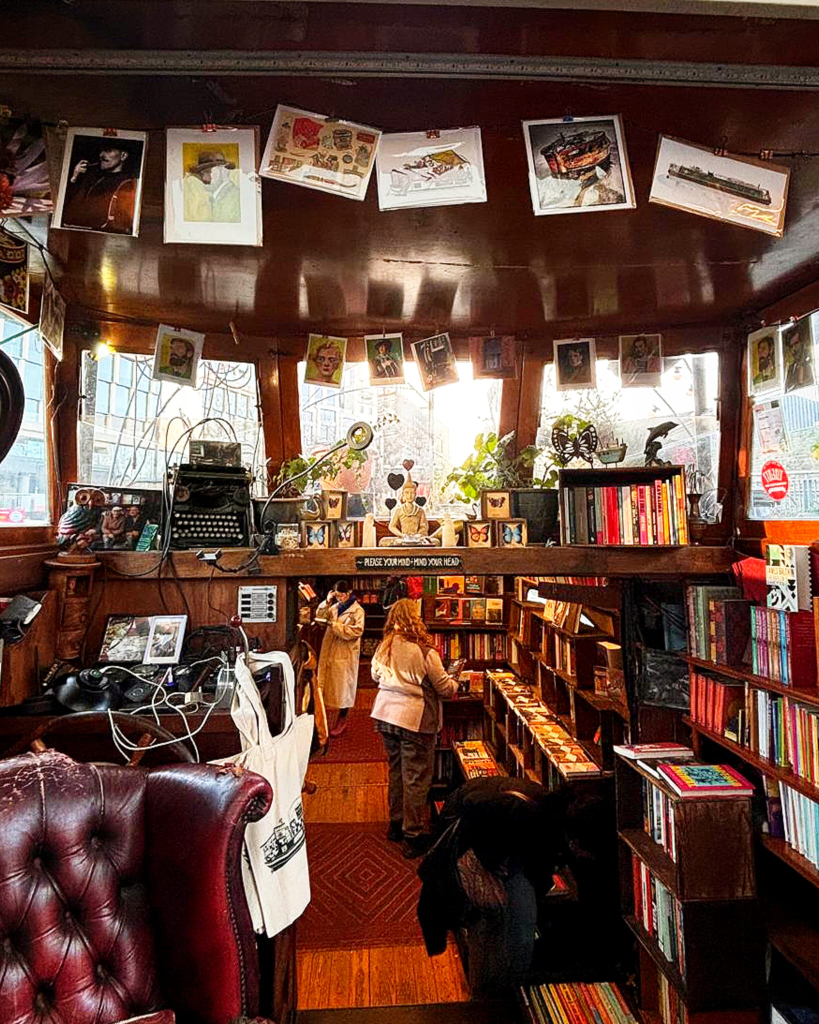
What struck me most about the interior, however, was its atmosphere. Old armchairs invited me to sit and stay awhile. Old carpets covered the wooden floor, adding warmth and texture. A vintage typewriter rested on a shelf, its keys slightly worn, perhaps from having once been used to compose stories. Nearby, I noticed other small relics of the past: an old telephone, decorative ornaments, and carefully placed curiosities that gave the boat the feeling of a miniature museum. The lighting was soft and warm. Every detail contributed to a sense of nostalgia. Time seemed to move – and seemed to have moved – a little slower here.
Eventually, I made my way back toward the upper deck. This part of the boat serves as a small performance space, and contains an open-air stage, on which musicians sometimes perform, writers gather for readings and discussions, and poets share their work at open-mic sessions. Even on this quiet day, it seemed to carry the energy of past performances. The whole thing felt less like a shop than a community hub where art is shared freely and literature becomes a social experience rather than a solitary one.
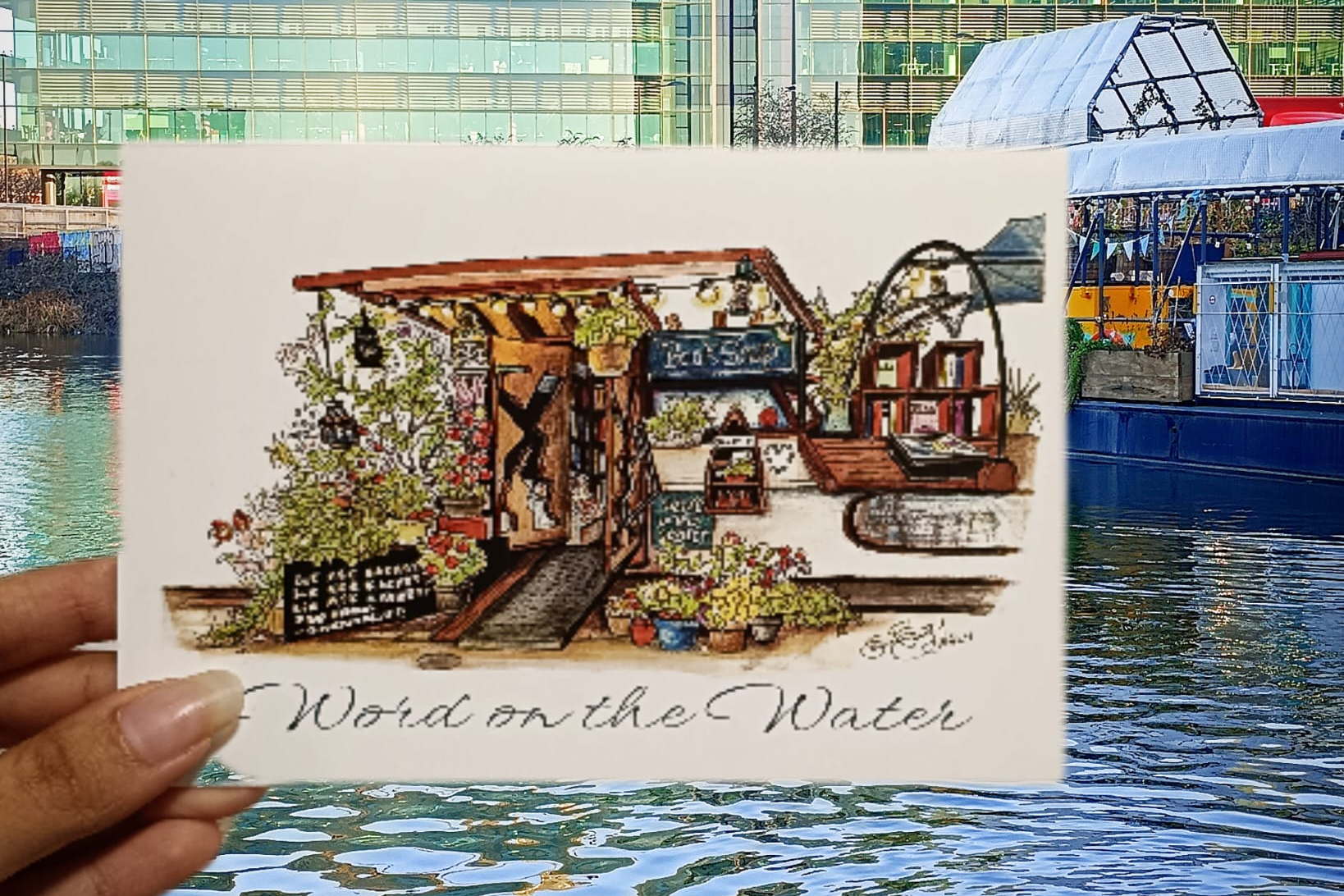
Before stepping away, I returned to the small souvenir section and chose a simple card to take with me. It was not an expensive purchase, not a grand object, but it felt meaningful, a tangible reminder of the afternoon I spent in that floating world of words.
 NOTTINGHAM CREATIVE WRITING HUB