Second-year BA Creative Writing student Tilly Hollyhead discusses T.J. Klune and the unique nature of his writing.
Before I came to university, I didn’t have any particular favourite book. Whenever anyone asked, it was as though everything I had ever read had vanished from my mind.
I didn’t have a favourite author either. I never had the experience of searching for a specific name on the shelf or hunting for more of someone’s work, because that wasn’t something that mattered to me. It was the characters that I liked – they were the things that would make or break a novel for me. As long as the plot gave them enough room to breathe, I would never consider the author behind the words – which is perhaps an oversight, considering I’m trying to become one of them!
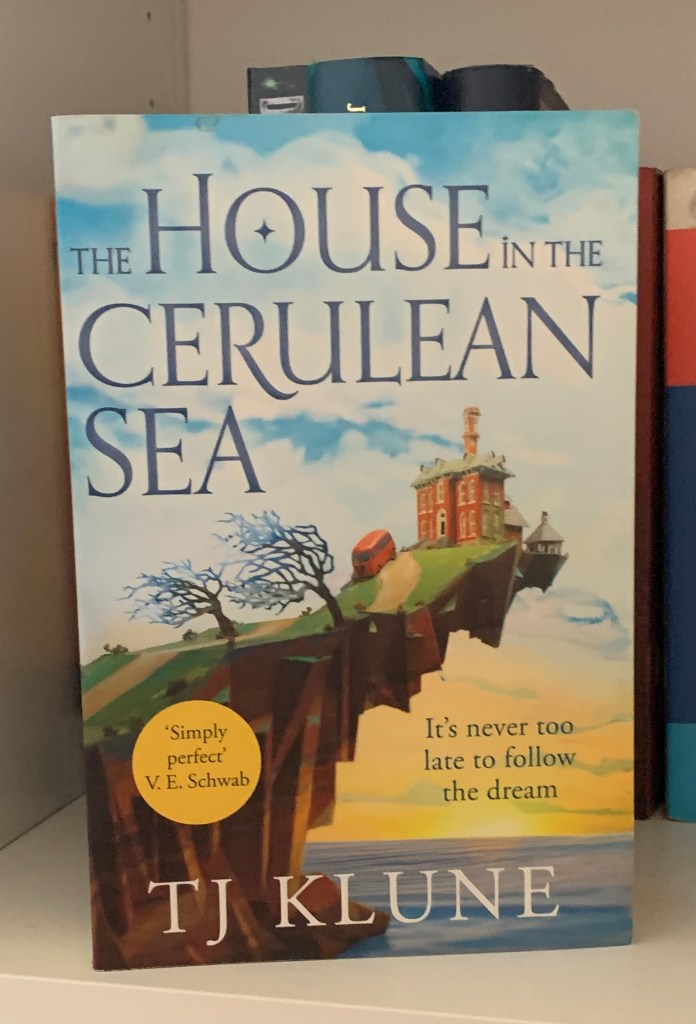
It was the characters who lead me to The House on The Cerulean Sea. Or, more accurately, it was my friend raving about it, but the point is that I ended up buying the book. A good choice.
T.J. Klune managed to fill a world with magic and wonder in a way that I had never expected. He created a world in which people could be made of slime, where gnomes didn’t get along with the rest of society, and where even the spawn of the anti-Christ could become someone endearing. It was a world with so much potential, and with characters that captured my heart in an instant. I tore through the book, expecting him to do something fantastical with the universe that he managed to build.
But he never did.
This man created a world that people could only dream of, and yet we only travel between two or three locations! We spend the opening in an office building and the rest of the time in someone’s house.
And yet this is part of what makes the story brilliant.
There’s no sprawling adventure that spans across three books and three sequels. There are only the characters we see in front of us, who have no intentions of going off to save the world and fight evil. They want to live their lives, no matter how odd those lives might seem to others.
They were like me, and yet so wonderfully different. For the life of me, I couldn’t understand them, despite relating to them on so many levels.
So I found myself doing the one thing that had never previously made much sense to me – searching for books with his name on them.
Whenever I saw one of his books on a shelf, the dent that it would put into my bank account seemed to be so richly compensated. The prospect of escaping into these worlds again, to only get a glimpse of the wider picture before settling down alongside our characters, was something of a dream.

Under The Whispering Door introduced me to the supernatural. Ghosts were no longer something to be feared, but a grandfather who enjoyed messing with the living and someone’s childhood dog. The Grim rReaper was not some ghastly figure in a hood, but a woman who had been given the job by chance. The door to the afterlife was not some grand structure, but the smallest opening in the smallest room in someone’s home.
We’re teased by grand ideas. We even see what we can only assume is the creator of the universe. We get to see him conversing with our characters, giving us cryptic messages about his grand plans, yet never providing answers.
Want to know what the meaning was behind all the hints he provided us with? I don’t.
Klune writes in such a way that we adopt the same attitude of our characters – we could not care less about why the universe was created or what is going to happen next. We just want to see the people we love safe.
It’s crazy to think about. In almost any other book, the author would take the opportunity to raise the stakes. There would be a final battle spanning across multiple chapters, perhaps. One of our beloved characters may even die, spurring on the others in their final moments to defeat the evil in charge of the universe and make everything right for the future souls that need guidance. This book ends with the creator of the universe still in charge, our characters finding peace with that through the knowledge that they can all stay together.
It sounds like the most unsatisfying ending in the world and the only thing I can say is try it before you judge.
So, what’s the take away from this? Am I just a rabid fan trying to get more people involved with my favourite story? Or is this a short review-essay that will be lost among thousands of others?
Well, it’s all those things. But it’s also a piece of advice to writers. Try to capture life.
Sometimes we get caught up in the overarching plots of our novels or the messages we’re trying to convey. It’s easy to forget that people are often meant to be at the heart of our stories. Their lives are what makes our stories unique. Their backstories, emotions and morals are the things that propel the plot forwards in a way that is meaningful.
Humanising characters serves to bring out the strongest parts of your story. Any emotional beats or deaths are heightened by the fact that these events are happening to people we perceive as real, people we care about.
There’s something amazing about capturing the little lives of our characters. Those little lives lead to big things.
 NOTTINGHAM CREATIVE WRITING HUB